
Call us now :08071790689
 Send Inquiry
 Send Inquiry
Kjeldahl Flask
Price 150.0 INR/ Piece
MOQ : 1 Piece
Kjeldahl Flask Specification
- Shape
- Conical with long neck
- Features
- Highly resistant to chemicals, clear graduation marks, uniform wall thickness for heat resistance
- Temperature Resistance
- Thermal shock resistant up to 500°C
- Glass Type
- Borosilicate glass
- Type
- Kjeldahl Flask
- Equipment Type
- Laboratory glassware
- Equipment Materials
- Borosilicate glass
- Material
- Borosilicate glass
- Capacity (Ltr)
- 500 ml (Common capacity, other volumes available)
Kjeldahl Flask Trade Information
- Minimum Order Quantity
- 1 Piece
- Supply Ability
- 1 Piece Per Day
- Delivery Time
- 15 Days
Kjeldahl Flask About
Kjeldahl Flask
We are an eminent name, which is engaged in offering Kjeldhal Flask to respectable clients. The offered range of kjeldhal flasks is made utilizing premium grade raw material and innovative techniques in complete adherence with the industry laid norms and standards. Along with this, the offered range of kjeldhal flasks is available in number of customized designs, shapes and allied specifications in accordance with the diverse demands of clients.
| CAPACITY ML | APPROX. O.D. X HEIGHT , MM |
| 10 | 30 X 180 |
| 30 | 40 X 180 |
| 100 | 61 X 210 |
| 300 | 80 X 298 |
| 500 | 97 X 325 |
| 800 | 113 X 375 |
Robust Construction for Laboratory Precision
The Kjeldahl Flask is engineered using premium borosilicate glass, which provides exceptional resistance to both chemicals and thermal shock. Its conical shape with a long neck facilitates the mixing and heating processes essential in laboratory analysis, ensuring reliable and reproducible results every time.
Versatile Applications across Laboratories
Widely used in nitrogen determination following the Kjeldahl method, this flask suits chemical, food, environmental, and research laboratories. Its design supports accurate volumetric measurements and safe handling during heating, making it indispensable for various analytical and preparative tasks.
FAQs of Kjeldahl Flask:
Q: How is a Kjeldahl Flask used in laboratory processes?
A: A Kjeldahl Flask is primarily used for nitrogen estimation through the Kjeldahl method in analytical chemistry. Its conical body and long neck facilitate digestion, distillation, and other processes that involve mixing and heating of samples.Q: What materials are Kjeldahl Flasks made from and why?
A: Kjeldahl Flasks are manufactured from borosilicate glass due to its superior resistance to chemicals and ability to endure temperatures up to 500C without thermal shock, making it ideal for laboratory use where heating and strong reagents are common.Q: When should a Kjeldahl Flask be chosen over other laboratory glassware?
A: A Kjeldahl Flask should be selected when procedures require vigorous heating and digestion of samples, such as nitrogen determination, where resistance to sudden temperature changes and harsh chemicals is necessary.Q: Where are Kjeldahl Flasks typically used?
A: Kjeldahl Flasks are commonly used in chemical, agricultural, food, and educational laboratories across research institutions, industry facilities, and academic centers for analytical procedures involving sample digestion and distillation.Q: What benefits does the borosilicate glass provide for Kjeldahl Flasks?
A: Borosilicate glass offers high resistance to thermal shock and chemical corrosion, clear graduation marks for precise measuring, and a robust structure due to uniform wall thickness, ensuring long-term reliability in the laboratory.Q: Can Kjeldahl Flasks handle rapid temperature changes during experiments?
A: Yes, these flasks are specifically designed to withstand rapid temperature shiftsup to 500Cthanks to their borosilicate glass composition, reducing the risk of breakage during intense heating and cooling cycles.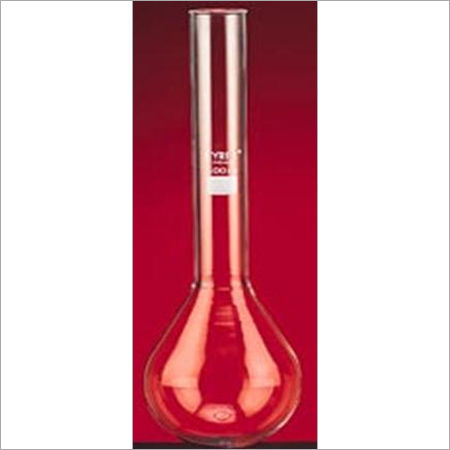
Tell us about your requirement

Price:
Quantity
Select Unit
- 50
- 100
- 200
- 250
- 500
- 1000+
Additional detail
Mobile number
Email

More Products in Laboratory Glassware Category
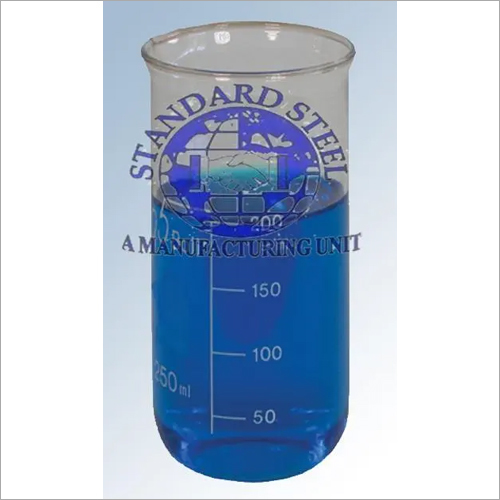
Glass Beaker
Price 85.0 INR / Piece
Minimum Order Quantity : 1 Piece
Glass Type : Clear Borosilicate Glass
Type : Other, Laboratory Glass Beaker
Equipment Materials : Borosilicate Glass
Temperature Resistance : Up to 400C
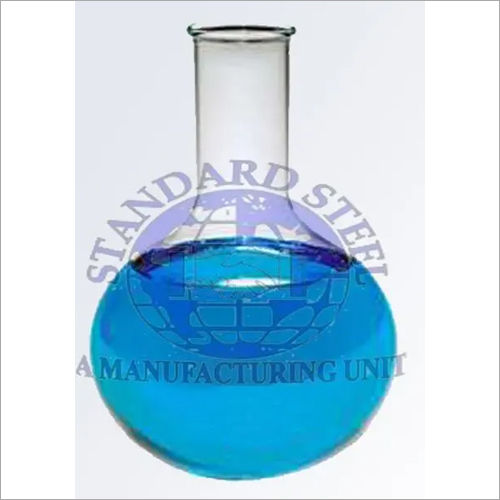
Laboratory Flask
Price 150.0 INR / Piece
Minimum Order Quantity : 1 Piece
Glass Type : Borosilicate
Type : Other, Laboratory Flask
Equipment Materials : Borosilicate Glass
Temperature Resistance : Up to 400C approx.
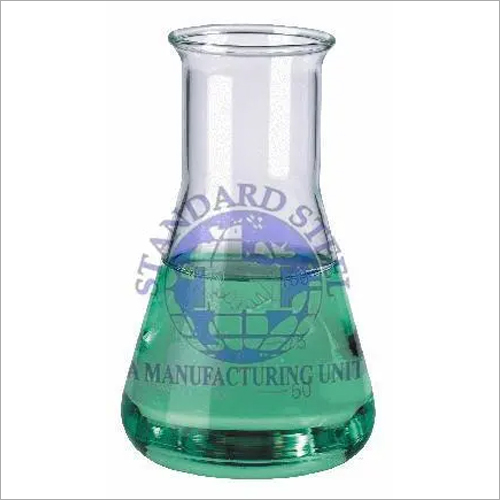
Conical Flask
Price 150.0 INR / Piece
Minimum Order Quantity : 1 Piece
Glass Type : Borosilicate Glass
Type : Other, Conical Flask
Equipment Materials : Borosilicate Glass
Temperature Resistance : Up to 250C (approximate, depends on manufacturer)
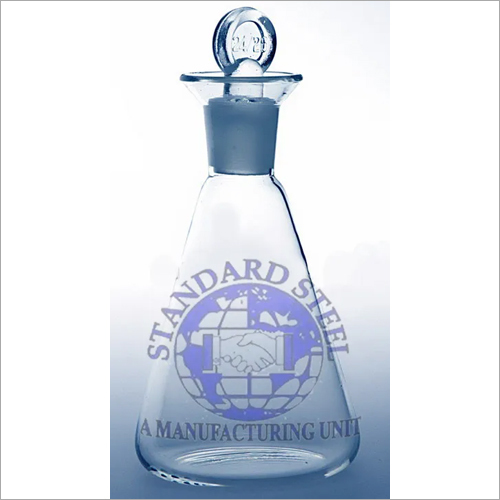
Iodine Flask
Price 150.0 INR / Piece
Minimum Order Quantity : 1 Piece
Glass Type : Clear Borosilicate Glass
Type : Other, Laboratory Iodine Flask
Equipment Materials : Borosilicate Glass
Temperature Resistance : Up to 250C

 Send Inquiry

Our Products
- Hospital Furniture Manufacturer
- Hospital Beds
- Hospital Trolley
- Delivery Table
- Hospital Cabinet
- IV Stand
- Hospital Stretcher
- Revolving Stool
- Examination Couch
- Mortuary Equipment
- Laboratory Furniture
- Anatomical Models
- Pharmacy Equipment
- Operating Table
- Blood Bank Equipment
- Medical Scale
- Laboratory Glassware
- Laboratory Equipment
- Laboratory Instrument
- Operation Theater Light
- Microscope
- Scientific Instrument
- LED Operation Room Light
- Anatomy Equipment
- Muffle Furnace
- Laboratory Incubators
- Wheel Chairs
- Industrial Oven
- Hot Air Oven
- Laboratory Spectrometer
- Hospital Holloware
- Laboratory Clamp
- Laboratory Ware
- Hospital Delivery Bed
- Mortuary Equipment
- Histopathology Equipment
- Blood Bank


530, Ram Bagh Road, Ambala Cantt,Ambala Cantt - 133001, Haryana, India

Mr Sachin Dhiman
(Director )
Mobile :08071790689
 Send Inquiry
 Send SMS
Developed and Managed by Infocom Network Private Limited.


 English
 Spanish
 French
 German
 Italian
 Chinese (Simplified)
 Japanese
 Korean
 Arabic
 Portuguese