
Call us now :08071790689
 Send Inquiry
 Send Inquiry
Measuring Cylinders
Price 150.0 INR/ Piece
MOQ : 1 Piece
Measuring Cylinders Specification
- Display Type
- Graduated markings
- Control Type
- Manual
- Temperature Resistance
- Up to 120°C (Glass), 100°C (Plastic)
- Shape
- Cylindrical
- Power Supply
- Not required
- Glass Type
- Borosilicate Glass
- Accuracy
- Class A or Class B as per DIN/ISO standards
- Type
- Measuring Cylinder
- Dimension (L*W*H)
- Varies by capacity (e.g., 100ml cylinder is approx. 2.5 x 2.5 x 25 cm)
- Equipment Type
- Volumetric Laboratory Glassware
- Equipment Materials
- Borosilicate Glass / Polypropylene (PP)
- Material
- Glass / Plastic (Polypropylene)
- Application
- Laboratory liquid volume measurement
- Capacity (Ltr)
- Graduated from 10 ml up to 2000 ml
Measuring Cylinders Trade Information
- Minimum Order Quantity
- 1 Piece
- Supply Ability
- 1 Piece Per Day
- Delivery Time
- 15 Days
Measuring Cylinders About
Measuring Cylinders
Borosilicate glass made Measuring Cylinder is reckoned for its high temperature proof design and high temperature protection capacity. Advanced design of this lab ware prevents formation of bubble of stored liquids. It can resist thermal shock at 300 degree C temperature. Offered Measuring Cylinder is completely protected against acid and alkali and it possesses unique thermal conductivity level. It has standard tensile strength and its linear expansion co-efficiency deserves praise. Its refractive index is 1.47 and annealing point is 560 degree C. This borosilicate item has standard measurement range. Lowest measurement point is marked on its concave surface and highest point is printed on its convex surface.
| CAPACITY , ML | GRADUATION INTERVAL, MM |
| 5 | 0.1 |
| 10 | 0.2 |
| 25 | 0.5 |
| 50 | 1.0 |
| 100 | 1.0 |
| 250 | 2.0 |
| 500 | 5.0 |
| 1000 | 10.0 |
Precision for Laboratory Measurements
Measuring cylinders ensure reliable and accurate liquid volume readings, essential in scientific and educational laboratories. With capacities from 10 ml to 2000 ml and clear, easy-to-read graduated markings, users can confidently measure liquids for various applications, meeting both research and quality control requirements.
Robust Construction and Material Options
Choose between borosilicate glass for superior thermal and chemical resistance, or polypropylene (PP) for lightweight, shatterproof utility. Both variants are designed for durability and compliance with international accuracy standards, making them suitable for a wide spectrum of laboratory environments.
Versatile Usage and Easy Handling
The cylindrical design and clear graduations enable effortless pouring and reading. Whether used in educational settings, research labs, or industrial processes, these cylinders provide efficient solutions for manual, precise measurement tasks without the need for power supply.
FAQs of Measuring Cylinders:
Q: How do I accurately measure liquids using a measuring cylinder?
A: To measure liquids, place the cylinder on a flat, stable surface. Pour the liquid gently to avoid splashing or foaming. Check the meniscus at eye level and read the graduated marking that aligns with the bottom of the curve for accurate measurement.Q: What materials are used in the construction of measuring cylinders?
A: Measuring cylinders are constructed from either borosilicate glass, which offers excellent thermal and chemical resistance, or polypropylene (PP), known for its lightweight and shatter-resistant properties. Both options ensure durability and reliable performance in laboratory settings.Q: When should I choose glass or plastic measuring cylinders?
A: Glass measuring cylinders, made of borosilicate, are ideal when resistance to high temperatures (up to 120C) and chemicals is essential. Plastic cylinders are suitable for general use, particularly when a lightweight or break-resistant option is preferred, with a maximum temperature tolerance of 100C.Q: Where are measuring cylinders commonly used?
A: Measuring cylinders are utilized primarily in scientific laboratories, educational institutions, industrial quality control labs, and research facilities for precise liquid volume measurement, sample preparation, and quantitative analysis.Q: What accuracy standards do these measuring cylinders meet?
A: The cylinders conform to Class A or Class B accuracy according to DIN/ISO standards, ensuring consistent precision for laboratory tasks. Select Class A for maximum accuracy in analytical procedures, or Class B for general measurements.Q: How can I benefit from using a measuring cylinder in my workflow?
A: Using a measuring cylinder enables precise and repeatable liquid measurements, which improves consistency and reliability in laboratory experiments and procedures. Robust material choices also reduce the risk of errors and contamination.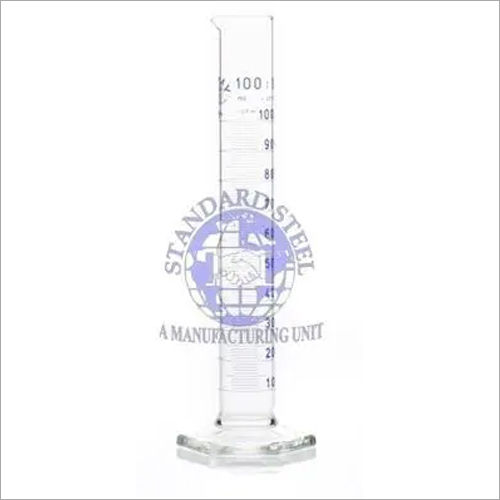
Tell us about your requirement

Price:
Quantity
Select Unit
- 50
- 100
- 200
- 250
- 500
- 1000+
Additional detail
Mobile number
Email

More Products in Laboratory Glassware Category
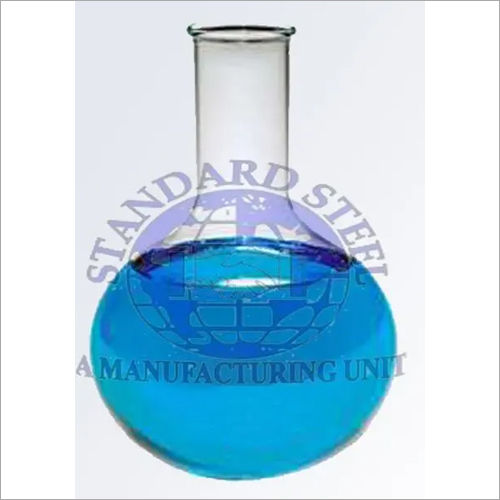
Laboratory Flask
Price 150.0 INR / Piece
Minimum Order Quantity : 1 Piece
Equipment Materials : Borosilicate Glass
Material : Glass
Application : Mixing, heating, and storage of chemical solutions in laboratories
Dimension (L*W*H) : Varies as per capacity (Typical sizes range from 50 mL to 1000 mL)
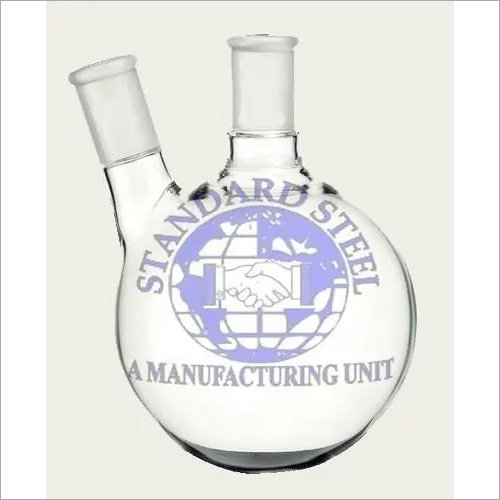
Flask Two Neck
Price 350.0 INR / Piece
Minimum Order Quantity : 1 Piece
Equipment Materials : Borosilicate Glass
Material : Borosilicate Glass
Application : Laboratory, Chemical Experiments, Research
Dimension (L*W*H) : Varies (Check specific model)
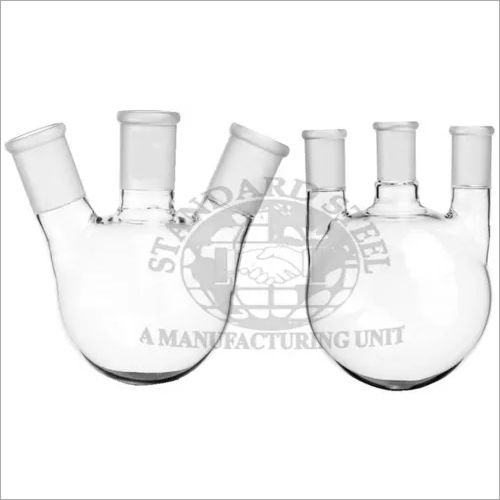
Flask Three Neck
Price 450.0 INR / Piece
Minimum Order Quantity : 1 Piece
Equipment Materials : Borosilicate Glass
Material : Borosilicate Glass
Application : Chemical Laboratory, Distillation, Reaction Vessel
Dimension (L*W*H) : Varies as per capacity, typically cylindrical flask dimensions
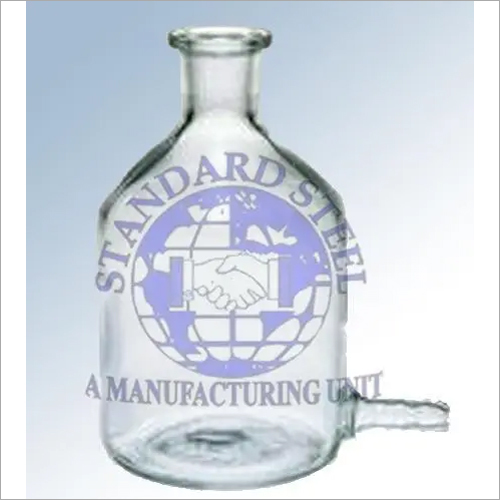
Aspirator Bottle
Minimum Order Quantity : 1 Piece
Equipment Materials : Borosilicate Glass
Material : Borosilicate Glass
Application : Laboratory use for vacuum filtration and liquid aspiration
Dimension (L*W*H) : Varies as per requirement

 Send Inquiry

Our Products
- Hospital Furniture Manufacturer
- Hospital Beds
- Hospital Trolley
- Delivery Table
- Hospital Cabinet
- IV Stand
- Hospital Stretcher
- Revolving Stool
- Examination Couch
- Mortuary Equipment
- Laboratory Furniture
- Anatomical Models
- Pharmacy Equipment
- Operating Table
- Blood Bank Equipment
- Medical Scale
- Laboratory Glassware
- Laboratory Equipment
- Laboratory Instrument
- Operation Theater Light
- Microscope
- Scientific Instrument
- LED Operation Room Light
- Anatomy Equipment
- Muffle Furnace
- Laboratory Incubators
- Wheel Chairs
- Industrial Oven
- Hot Air Oven
- Laboratory Spectrometer
- Hospital Holloware
- Laboratory Clamp
- Laboratory Ware
- Hospital Delivery Bed
- Mortuary Equipment
- Histopathology Equipment
- Blood Bank


530, Ram Bagh Road, Ambala Cantt,Ambala Cantt - 133001, Haryana, India

Mr Sachin Dhiman
(Director )
Mobile :08071790689
 Send Inquiry
 Send SMS
 Call Me Free
Developed and Managed by Infocom Network Private Limited.


 English
 Spanish
 French
 German
 Italian
 Chinese (Simplified)
 Japanese
 Korean
 Arabic
 Portuguese