
Call us now :07971645166
 Send Inquiry
 Send Inquiry
Standard Glassware Joint Clips
MOQ : 1 Piece
Standard Glassware Joint Clips Specification
- Control Type
- Manual
- Glass Type
- Standard Ground Glass Joints
- Features
- Reusable, Chemically Resistant, Color Coded
- Temperature Resistance
- Typically up to 120C for plastic, higher for metal
- Shape
- Clip/Saddle Type
- Type
- Standard Glassware Joint Clip
- Dimension (L*W*H)
- Varies according to joint size (commonly fits 14/20, 19/22, 24/40, etc.)
- Equipment Type
- Glassware Accessory
- Equipment Materials
- Polyacetal, Polypropylene or Stainless Steel
- Material
- Durable Plastic or Stainless Steel
- Application
- Securing standard ground glass joints in laboratory glassware assemblies
- Locking Mechanism
- Spring-action or snap-fit design
- Standards
- Conforms to laboratory glassware standards (ASTM, ISO)
- Compatibility
- Designed for common laboratory joint sizes (14/20, 19/22, 24/40, etc.)
- Weight
- Approximately 2-5 grams each
- Color
- Typically color-coded by size
- Reusable
- Yes, multiple use
Standard Glassware Joint Clips Trade Information
- Minimum Order Quantity
- 1 Piece
- Supply Ability
- 1 Piece Per Week
- Delivery Time
- 15 Week
About Standard Glassware Joint Clips
Standard Glassware Joint Clips can be used for several laboratories as well as medical institutions. These have been made from fine quality material and have availability in various sizes and colors. Supplied clips have been made from optimum plastic material. The clips can protect the laboratory glassware joints. In addition, these are used to secure the two sides together. Standard Glassware Joint Clips can be used in different temperature as well as chemical environments. The use of jointed glassware helps to avoid spillage and leakage.
Securing Laboratory Joints Efficiently
Standard Glassware Joint Clips provide a reliable solution for fastening ground glass joints during laboratory experiments. Their spring-action or snap-fit design ensures a secure fit while permitting quick release when needed. This efficiency in securing joints minimizes the risk of leakage or accidental disconnection during procedures, enhancing laboratory safety and precision.
Robust Materials with Superior Resistance
Manufactured from polyacetal, polypropylene, or stainless steel, these joint clips offer exceptional durability and superior resistance to harsh chemicals, acids, and solvents. The design ensures longevity, even in demanding laboratory environments. Their reusability also delivers cost-effectiveness over multiple cycles of use, making them a practical choice for regular laboratory operations.
FAQs of Standard Glassware Joint Clips:
Q: How do I use a Standard Glassware Joint Clip to secure laboratory apparatus?
A: To secure a glassware joint, simply align the Standard Glassware Joint Clip with the adjoining ground glass surfaces and gently engage the spring-action or snap-fit mechanism until it locks into place. This helps prevent accidental separation during laboratory experiments.Q: What sizes and joint types are compatible with these clips?
A: These clips are designed for standard laboratory joints, typically fitting sizes such as 14/20, 19/22, and 24/40. They are compatible with standard ground glass joints commonly found in glassware assemblies.Q: When should I opt for stainless steel clips instead of plastic ones?
A: Choose stainless steel clips when your experiments require higher temperature resistance or exposure to harsher chemicals beyond the limits of plastic (up to 120C). Metal clips are ideal for more demanding thermal or chemical environments.Q: Where can I use these joint clips in the laboratory?
A: Standard Glassware Joint Clips can be used wherever ground glass joints need to be secured, such as in distillation, reflux, filtration, or general chemical synthesis setups. They are suitable for educational, research, and industrial laboratories.Q: What are the benefits of color-coded joint clips?
A: Color coding allows for quick and easy identification of the correct clip size, streamlining laboratory work, reducing setup errors, and promoting safety when assembling glassware.Q: Are these joint clips reusable, and what is their typical lifespan?
A: Yes, these clips are designed for repeated use. If they are maintained properly and not exposed to conditions beyond their specified limits, they can be used through numerous laboratory cycles.Q: Do the joint clips meet laboratory equipment standards?
A: Absolutely. These joint clips conform to international standards like ASTM and ISO, ensuring their quality, compatibility, and performance in laboratory applications.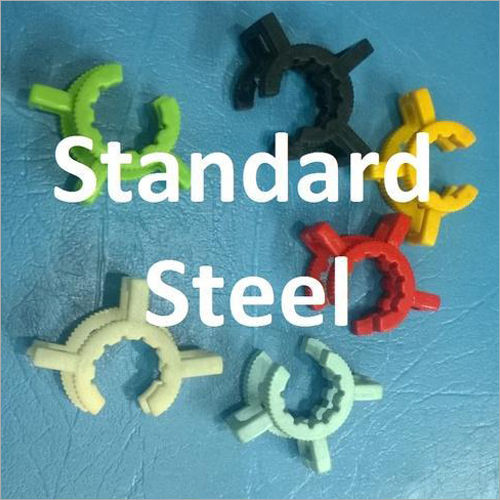
Tell us about your requirement

Price:
Quantity
Select Unit
- 50
- 100
- 200
- 250
- 500
- 1000+
Additional detail
Mobile number
Email

More Products in Laboratory Clamp Category
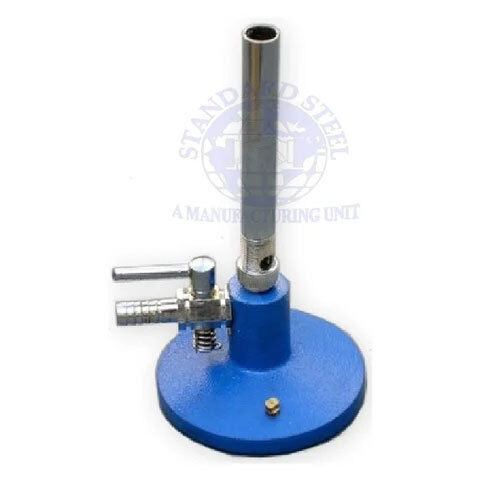
Bunsen Burner With Stopcock
Price 180.0 INR
Minimum Order Quantity : 10
Material : Metal base with alloy nozzle
Shape : Cylindrical nozzle with a round base
Application : Laboratory heating and flame applications
Equipment Materials : Metal and alloy
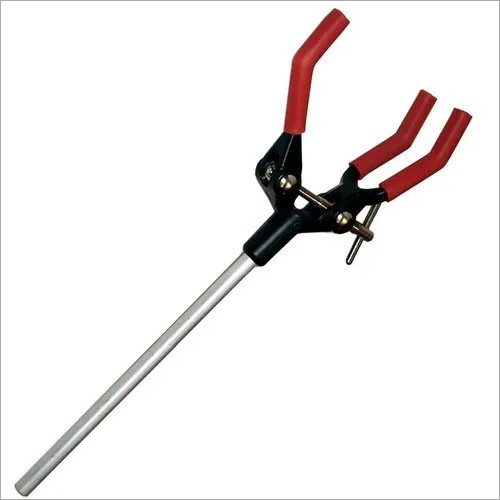
laboratory Three Finger Clamp
Price 155.00 INR / Piece
Minimum Order Quantity : 10 Pieces, Piece
Material : Stainless Steel, Rubber
Shape : Telescopic
Application : Gardening, Pruning, Trimming
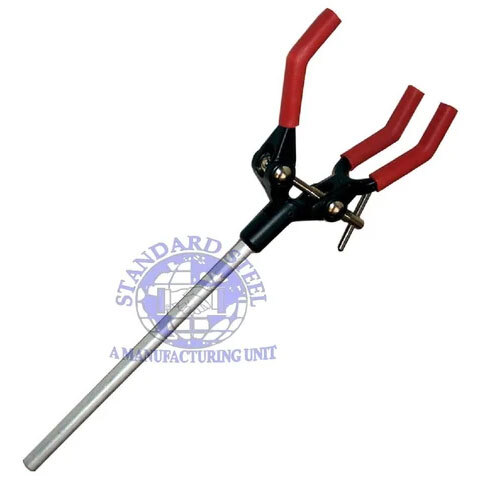
Laboratory 3 Finger Clamp
Price 155.0 INR
Minimum Order Quantity : 15
Material : Metal and Plastic
Shape : ThreeFinger Design
Application : Laboratory
Equipment Materials : Metal and Plastic
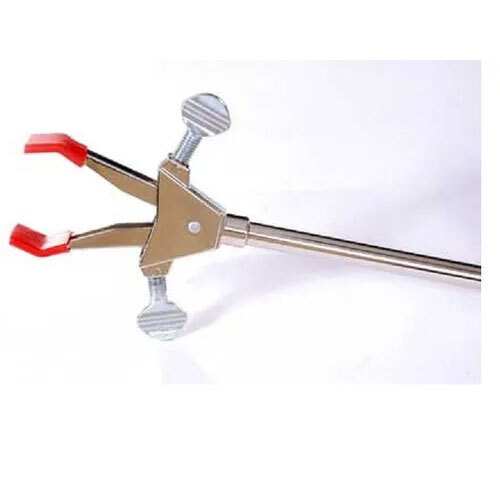
Laboratory Two Prong Clamp
Price 180.0 INR
Minimum Order Quantity : 500
Material : Steel with rubber coating
Shape : Twoprong design
Application : Holding laboratory apparatus securely
Equipment Materials : Metallic steel with rubber grips

 Send Inquiry

Our Products
- Hospital Furniture Manufacturer
- Hospital Beds
- Hospital Trolley
- Delivery Table
- Hospital Cabinet
- IV Stand
- Hospital Stretcher
- Revolving Stool
- Examination Couch
- Mortuary Equipment
- Laboratory Furniture
- Anatomical Models
- Pharmacy Equipment
- Operating Table
- Blood Bank Equipment
- Medical Scale
- Laboratory Glassware
- Laboratory Equipment
- Laboratory Instrument
- Operation Theater Light
- Microscope
- Scientific Instrument
- LED Operation Room Light
- Anatomy Equipment
- Muffle Furnace
- Laboratory Incubators
- Wheel Chairs
- Industrial Oven
- Hot Air Oven
- Laboratory Spectrometer
- Hospital Holloware
- Laboratory Clamp
- Laboratory Ware
- Hospital Delivery Bed
- Mortuary Equipment
- Histopathology Equipment
- Blood Bank


530, Ram Bagh Road, Ambala Cantt,Ambala Cantt - 133001, Haryana, India

Mr Sachin Dhiman
(Director )
Mobile :07971645166
 Send Inquiry
 Send SMS
Developed and Managed by Infocom Network Private Limited.


 English
 Spanish
 French
 German
 Italian
 Chinese (Simplified)
 Japanese
 Korean
 Arabic
 Portuguese