
Call us now :08071790689
 Send Inquiry
 Send Inquiry
Iodine Flask
Price 150.0 INR/ Piece
MOQ : 1 Piece
Iodine Flask Specification
- Features
- Flat Bottom, Wide Neck, Ground Glass Stopper, Chemical Resistant
- Temperature Resistance
- Up to 250°C
- Glass Type
- Clear Borosilicate Glass
- Control Type
- Manual
- Power Supply
- Not Required
- Accuracy
- Class A or Class B Tolerance
- Type
- Laboratory Iodine Flask
- Dimension (L*W*H)
- Varies as per capacity (typically 100ml, 250ml, 500ml)
- Equipment Type
- Volumetric Flask
- Equipment Materials
- Borosilicate Glass
- Material
- Borosilicate Glass
- Capacity (Ltr)
- 0.1, 0.25, 0.5
Iodine Flask Trade Information
- Minimum Order Quantity
- 1 Piece
- Supply Ability
- 1 Piece Per Day
- Delivery Time
- 15 Days
Iodine Flask About
Iodine Flask
We are readily engaged in offering Iodine Flask to the respectable clients' premises. The offered range of iodine flasks is available in number of customized specifications and designs in accordance with the diverse demands of clients. In addition to this, the offered range of iodine flasks is checked on different characteristics to ensure its conformation with the industry laid norms and standards.
Flask has ground socket and cup shaped top. Stopper has extended handle which projects well above the liquid seal.
Capacity ml - 250, 500
Precision and Versatility in Chemical Analysis
Designed for reliability, the Laboratory Iodine Flask is ideal for precise chemical titrations and analytical experiments. Its durable borosilicate glass construction ensures thermal stability, while the clear visibility aids in accurate measurement. The wide variety of sizes offers suitability for different laboratory scales, enhancing research flexibility.
Superior Construction and Chemical Resistance
Crafted from quality borosilicate glass, these iodine flasks are resistant to thermal shock and corrosion. The flat bottom and wide neck facilitate stable setup and convenient sample addition. The ground glass stopper provides a secure seal, preserving reagents and preventing contamination across diverse application environments.
FAQs of Iodine Flask:
Q: How should a laboratory iodine flask be used for optimal accuracy?
A: To ensure optimal accuracy, fill the iodine flask up to the calibration mark, ensure the stopper fits securely, and use it at ambient temperatures for precision. Adhering to the Class A or B tolerance noted on your flask guarantees precise volumetric measurements.Q: What laboratories require iodine flasks, and for which applications are they most beneficial?
A: Iodine flasks are essential in analytical chemistry, research, pharmaceutical, and educational labs. They are commonly used in iodometric titrations, preparation of standard solutions, and precise reagent dispensing due to their volumetric accuracy and chemical resistance.Q: When should I select a flask of 100ml, 250ml, or 500ml capacity?
A: Choose the flask size based on the volume of solution required for your procedure. 100ml is preferred for small-scale tests; 250ml is ideal for routine titrations, while 500ml suits larger batch preparations or analyses needing higher reagent quantities.Q: Where should borosilicate glass iodine flasks be stored and handled?
A: Store the flasks in a cool, dry, stable environment away from corrosive chemicals. Handle with care on level surfaces, ensuring the stopper and glass body remain clean and intact to maintain calibration and prevent contamination.Q: What are the benefits of using a borosilicate glass iodine flask in the laboratory?
A: Borosilicate glass offers superior chemical resistance, high thermal tolerance up to 250C, and longevity against frequent laboratory use. The clear glass aids easy observation, while precise calibration ensures repeatable experimental results.Q: How is the cleaning process for an iodine flask conducted?
A: Rinse the flask immediately after use with distilled water, followed by a mild laboratory detergent if necessary. For stubborn residues, soak with appropriate solvents, then rinse thoroughly to maintain measurement accuracy and chemical integrity.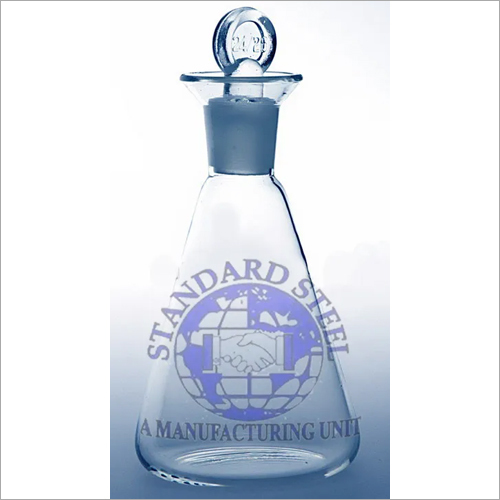
Tell us about your requirement

Price:
Quantity
Select Unit
- 50
- 100
- 200
- 250
- 500
- 1000+
Additional detail
Mobile number
Email

More Products in Laboratory Glassware Category
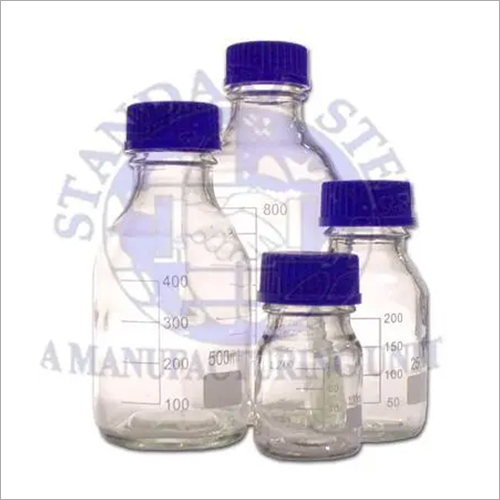
Reagent Bottle
Price 165.0 INR / Piece
Minimum Order Quantity : 1 Piece
Application : LAB
Equipment Materials : Borocilicate glass
Glass Type : Borosilicate glass
Material : Borosilicate glass
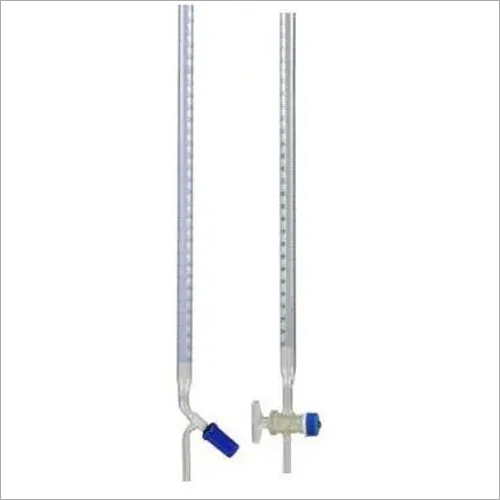
Glass Burette
Price 190.0 INR / Piece
Minimum Order Quantity : 1 Piece
Application : Volumetric Measurement in Laboratory Chemical Titrations
Equipment Materials : Glass, PTFE (stopcock)
Glass Type : Borosilicate Glass
Material : Borosilicate Glass
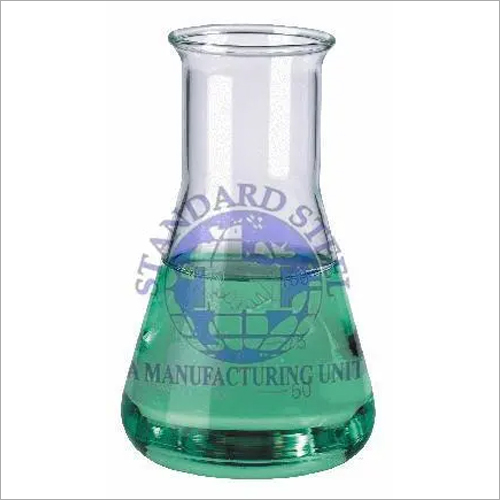
Conical Flask
Price 150.0 INR / Piece
Minimum Order Quantity : 1 Piece
Application : Laboratory experiments, sample mixing, titrations, chemical storage
Equipment Materials : Borosilicate Glass
Glass Type : Borosilicate Glass
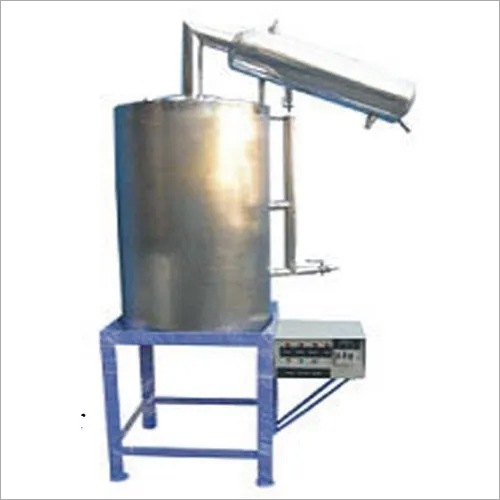
Water Still Apparatus
Minimum Order Quantity : 1 Piece
Application : LAB
Equipment Materials : stainless steel
Material : steel

 Send Inquiry

Our Products
- Hospital Furniture Manufacturer
- Hospital Beds
- Hospital Trolley
- Delivery Table
- Hospital Cabinet
- IV Stand
- Hospital Stretcher
- Revolving Stool
- Examination Couch
- Mortuary Equipment
- Laboratory Furniture
- Anatomical Models
- Pharmacy Equipment
- Operating Table
- Blood Bank Equipment
- Medical Scale
- Laboratory Glassware
- Laboratory Equipment
- Laboratory Instrument
- Operation Theater Light
- Microscope
- Scientific Instrument
- LED Operation Room Light
- Anatomy Equipment
- Muffle Furnace
- Laboratory Incubators
- Wheel Chairs
- Industrial Oven
- Hot Air Oven
- Laboratory Spectrometer
- Hospital Holloware
- Laboratory Clamp
- Laboratory Ware
- Hospital Delivery Bed
- Mortuary Equipment
- Histopathology Equipment
- Blood Bank


530, Ram Bagh Road, Ambala Cantt,Ambala Cantt - 133001, Haryana, India

Mr Sachin Dhiman
(Director )
Mobile :08071790689
 Send Inquiry
 Send SMS
Developed and Managed by Infocom Network Private Limited.


 English
 Spanish
 French
 German
 Italian
 Chinese (Simplified)
 Japanese
 Korean
 Arabic
 Portuguese