
Call us now :08071790689
 Send Inquiry
 Send Inquiry
Laboratory Dissecting Microscope
MOQ : 1 Pieces
Laboratory Dissecting Microscope Specification
- Shape
- Rectangular base with upright column
- Control Type
- Manual focus with rack and pinion arrangement
- Display Type
- None (visual observation through eyepiece)
- Temperature Resistance
- Room temperature operation
- Accuracy
- High optical accuracy
- Glass Type
- Optical glass lenses
- Power Supply
- Not Required (non-electric)
- Type
- Dissecting Microscope
- Dimension (L*W*H)
- 180 x 120 x 220 mm (approx)
- Product Type
- Dissecting Microscope
- Equipment Type
- Optical Microscope
- Equipment Materials
- Cast metal body with powder coating
- Material
- Metal & Glass
- Application
- Laboratory, Education, Biology Dissection Work
- Warranty
- 1 year
- Stage Type
- Fixed stage with two stage clips
- Portability
- Compact and lightweight for classroom use
- Color
- White/cream body with black stage
- Application Area
- Botany, zoology, and general dissection in labs
- Magnification Range
- 10x to 40x (typically with 10x eyepiece and 1x/2x objective)
- Eyepiece
- Wide field 10x
- Base
- Heavy, sturdy base for stability
- Head Type
- Monocular, inclined for comfortable viewing
- Objective
- 2x or 4x, rotatable nosepiece for selection
Laboratory Dissecting Microscope Trade Information
- Minimum Order Quantity
- 1 Pieces
- FOB Port
- exw
- Payment Terms
- Telegraphic Transfer (T/T)
- Supply Ability
- 500 Per Month
- Delivery Time
- 15 Days
- Sample Available
- Yes
- Sample Policy
- Sample costs shipping and taxes has to be paid by the buyer
- Packaging Details
- Standard Packing
- Main Export Market(s)
- Asia
- Main Domestic Market
- All India
- Certifications
- ISO CE
Laboratory Dissecting Microscope About
Dissecting Microscope- Dissecting Microscope Heavy round base with nicely designed body.
- sensitive focusing is done by rack and pinion.
- A joint revolving arm is provided for moving magnifying lens over full area of stage.
- It is Easily replaceable by a special Bull Eye lens 80mm dia to increase the field of version.
- A Plano concave mirror is fork for light reflection.
Versatile Laboratory Applications
This dissecting microscope is tailored for applications in botany, zoology, dissection, and general laboratory studies. Its precise optics and robust construction make it a reliable choice for both educational purposes and routine examination of samples. The compact design further ensures it fits seamlessly into classroom or lab settings.
Engineered for Comfort and Stability
With an inclined monocular head, the microscope promotes comfortable, strain-free viewing during extended observations. Its heavy, sturdy base ensures stability on workbenches. The powder-coated metal body and fixed stage with secure clips enhance durability, providing long-term, dependable use.
FAQs of Laboratory Dissecting Microscope:
Q: How do I change the magnification on this dissecting microscope?
A: To alter the magnification, simply rotate the nosepiece to switch between the 2x and 4x objective lenses. Combined with the fixed 10x eyepiece, this allows for total magnification levels of 10x, 20x, or 40x, meeting the needs for most dissection and observation activities.Q: What types of samples can be examined using this microscope?
A: This microscope is well-suited for observing plant specimens, small animals, insects, and other biological samples. Its application areas include botany, zoology, and general lab dissections, making it ideal for educational and research purposes.Q: When should I use a dissecting microscope instead of a compound microscope?
A: A dissecting microscope is preferable when you need to observe or manipulate larger, three-dimensional specimens that do not require high magnification, such as whole insects, leaves, or small anatomical dissections. For high-magnification viewing of slides, a compound microscope is typically recommended.Q: Where can this microscope be conveniently used?
A: Its compact footprint and lightweight build mean it is easily portable and fits well in classrooms, teaching laboratories, research institutes, and field stations. The robust design ensures stability wherever its used.Q: What is the process for focusing a sample on this microscope?
A: After placing your sample on the fixed stage and securing it with the stage clips, use the manual rack and pinion focusing mechanism to achieve a sharp image through the eyepiece. Start with the lowest objective for the widest view, then switch as needed.Q: How does this microscope benefit educational institutions?
A: Its user-friendly design, durability, and optical precision make it a valuable teaching tool. The simplicity of manual controls and the clarity of optical glass lenses support hands-on learning and facilitate better understanding in biology and related fields.Q: Does the microscope require any power supply?
A: No, this optical microscope operates without electricity, making it suitable for locations with limited power availability and enhancing its portability for field or classroom use.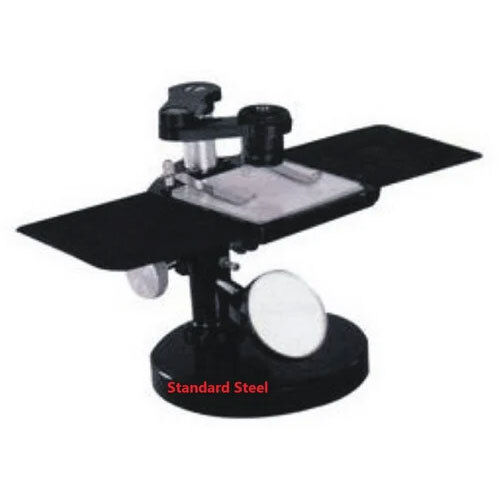
Tell us about your requirement

Price:
Quantity
Select Unit
- 50
- 100
- 200
- 250
- 500
- 1000+
Additional detail
Mobile number
Email

More Products in Laboratory Equipment Category
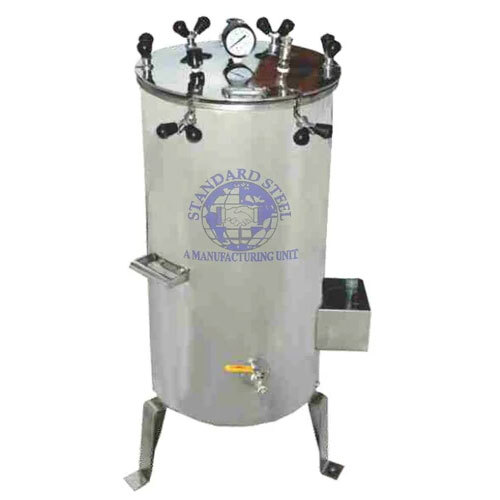
Vertical Autoclave Sterilizer
Price 19500.0 INR
Minimum Order Quantity : 1 Pieces
Material : Stainless Steel
Voltage : 220240V AC
Equipment Materials : Stainless Steel (SS 304/316)
Power : 26 kW depending on model
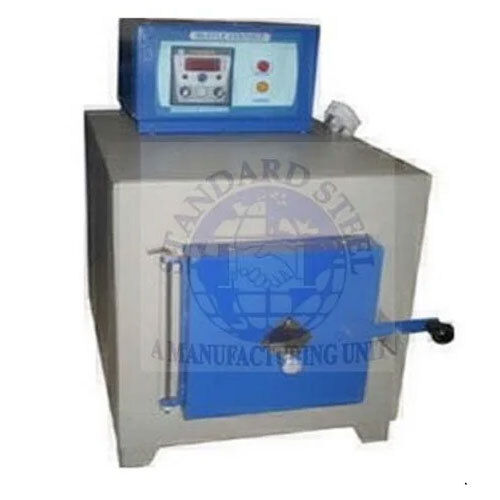
Muffle Furnace Laboratory
Price 16500.0 INR
Minimum Order Quantity : 1 Pieces
Material : Mild Steel, Ceramic Fiber Insulation, Heating Elements
Voltage : 220V AC
Equipment Materials : Powder Coated Mild Steel Outer Body
Power : 2300 W

Biological Safety Cabinet
Price 110000.0 INR
Minimum Order Quantity : 1 Piece
Material : MS powder coated
Voltage : 220 Watt (w)
Equipment Materials : MS powder coated
Power : 220 Watt (w)
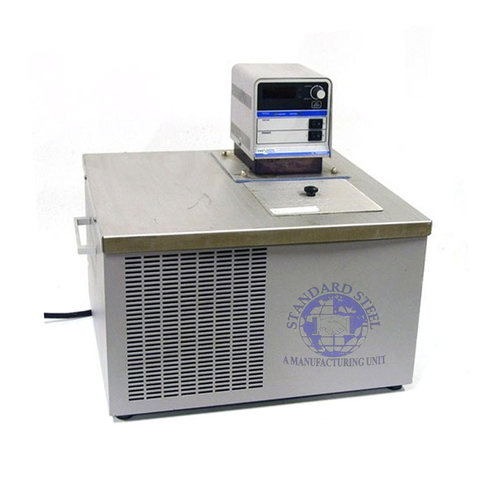
Refrigerated Water Bath
Price 22500.0 INR / Piece
Minimum Order Quantity : 1 Piece
Material : stainless steel
Voltage : 220 Watt (w)
Equipment Materials : stainless steel
Power : 220 Watt (w)

 Send Inquiry

Our Products
- Hospital Furniture Manufacturer
- Hospital Beds
- Hospital Trolley
- Delivery Table
- Hospital Cabinet
- IV Stand
- Hospital Stretcher
- Revolving Stool
- Examination Couch
- Mortuary Equipment
- Laboratory Furniture
- Anatomical Models
- Pharmacy Equipment
- Operating Table
- Blood Bank Equipment
- Medical Scale
- Laboratory Glassware
- Laboratory Equipment
- Laboratory Instrument
- Operation Theater Light
- Microscope
- Scientific Instrument
- LED Operation Room Light
- Anatomy Equipment
- Muffle Furnace
- Laboratory Incubators
- Wheel Chairs
- Industrial Oven
- Hot Air Oven
- Laboratory Spectrometer
- Hospital Holloware
- Laboratory Clamp
- Laboratory Ware
- Hospital Delivery Bed
- Mortuary Equipment
- Histopathology Equipment
- Blood Bank


530, Ram Bagh Road, Ambala Cantt,Ambala Cantt - 133001, Haryana, India

Mr Sachin Dhiman
(Director )
Mobile :08071790689
 Send Inquiry
 Send SMS
 Call Me Free
Developed and Managed by Infocom Network Private Limited.


 English
 Spanish
 French
 German
 Italian
 Chinese (Simplified)
 Japanese
 Korean
 Arabic
 Portuguese