
Call us now :08071790689
 Send Inquiry
 Send Inquiry
Vernier Travelling Microscope
MOQ : 1 Pieces
Vernier Travelling Microscope Specification
- Power Supply
- Not Required
- Temperature Resistance
- Ambient laboratory temperature
- Accuracy
- Up to 0.01 mm
- Control Type
- Manual knob adjustments
- Glass Type
- Optical glass lenses
- Display Type
- Vernier scale reading
- Speed Range
- Manual traverse
- Shape
- Rectangular base
- Features
- High precision, sturdy cast iron base, smooth sliding mechanism, adjustable telescope
- Type
- Vernier Travelling Microscope
- Dimension (L*W*H)
- Approx. 50 cm x 30 cm x 25 cm
- Equipment Type
- Measuring Instrument
- Equipment Materials
- Metal body with brass & glass components
- Power
- Manual operation (no electrical requirement)
- Material
- Cast iron base, brass vernier scale, glass scale
- Application
- lab
- Warranty
- 1
- Scale Graduation
- Main scale: 1 mm, Vernier: 0.01 mm
- Finish
- Powder coated, rust-resistant
- Measurement Mode
- Linear measurement
- Microscope Magnification
- 10X - 15X (depending on eyepiece)
- Portable
- Yes
- Movement Range
- Horizontal and vertical carriage movement, 15 cm travel
- Eyepiece
- Wide field
- Adjustment Method
- Fine screw adjustment
- Reading Method
- Direct from vernier scale
- Base
- Stable, heavy cast iron
- Suitable For
- Physics and chemistry labs, academic experiments
Vernier Travelling Microscope Trade Information
- Minimum Order Quantity
- 1 Pieces
- FOB Port
- exw
- Payment Terms
- Telegraphic Transfer (T/T)
- Supply Ability
- 500 Per Month
- Delivery Time
- 15 Days
- Sample Available
- Yes
- Sample Policy
- Sample costs shipping and taxes has to be paid by the buyer
- Packaging Details
- Standard Packing
- Main Export Market(s)
- Asia
- Main Domestic Market
- All India
- Certifications
- ISO CE
Vernier Travelling Microscope About
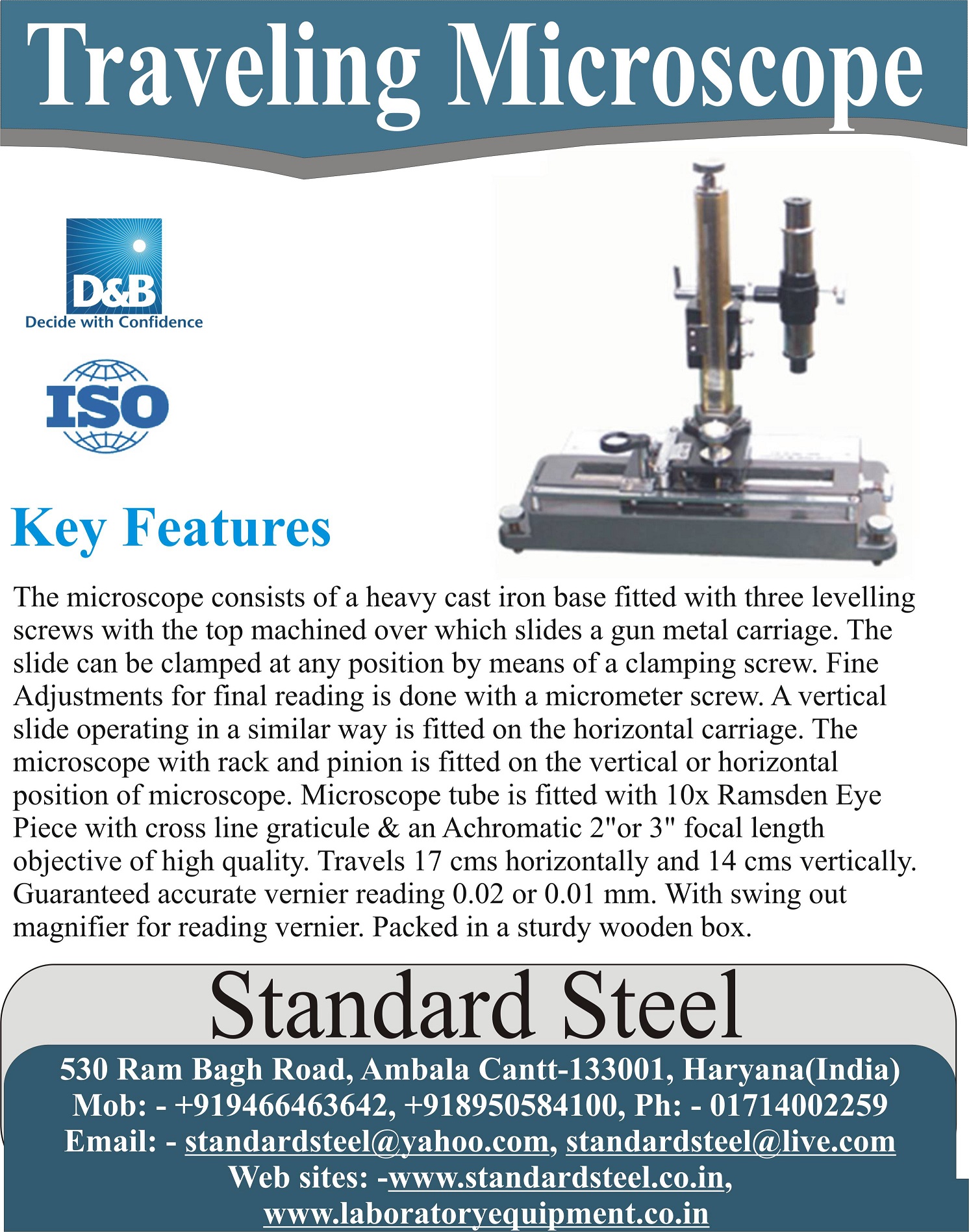
Laboratory Travelling MicroscopeThe microscope consists of a heavy cast iron base fitted with three leveling screws with the top machined over which slides a gun metal carriage. The slide can be clamped at any position by means of a clamping screw. Fine Adjustments for final reading is done with a micrometer screw. A vertical slide operating in a similar way is fitted on the horizontal carriage. The microscope with rack and pinion is fitted on the vertical or horizontal position of microscope. Microscope tube is fitted with 10x Ramsden Eye Piece with cross line graticule & an Achromatic 2"or 3" focal length objective of high quality. Travels 17 cms horizontally and 14 cms vertically. Guaranteed accurate vernier reading 0.02 or 0.01 mm. With swing out magnifier for reading vernier. Packed in a sturdy wooden box.
High Precision & Robust Construction
Engineered for accuracy, the Vernier Travelling Microscope offers measurement precision up to 0.01 mm through its finely crafted vernier scale. The stable, heavy cast iron base and smooth sliding mechanisms ensure reliable results, while the brass and glass components contribute to lasting durability in active laboratory environments.
Simple, Manual Operation
Working without electrical requirements, this microscope employs manual knob adjustments for both horizontal and vertical movement. Laboratory personnel can finely adjust the carriage and read measurements directly from the vernier scale, making operation intuitive and dependable even for beginners.
Versatile Laboratory Applications
Suitable for physics and chemistry labs, the Vernier Travelling Microscope is widely used for academic experiments involving precision measurement. Its portability and resistance to ambient laboratory temperatures make it an ideal choice for educators, distributors, manufacturers, and research facilities.
FAQs of Vernier Travelling Microscope:
Q: How does the Vernier Travelling Microscope provide accurate measurements?
A: It uses a main scale with 1 mm graduations and a vernier scale with 0.01 mm precision, ensuring fine and direct linear measurements observed through high-quality optical lenses.Q: What is the typical process for measuring with this microscope in a laboratory setting?
A: Users position the sample on the stable base, adjust the carriage horizontally or vertically via manual knobs, focus the telescope, then read the measurement directly from the vernier scale after aligning the reference points.Q: Where is this microscope most suitable for use?
A: This instrument is ideal for physics and chemistry laboratories, particularly in educational institutions and research facilities conducting academic experiments that demand precision.Q: When is it beneficial to use a Vernier Travelling Microscope over other measuring tools?
A: It is best for tasks requiring highly accurate linear measurementssuch as tracking small object movements or measuring diffraction patternswhere finer resolution than typical rulers or standard microscopes is needed.Q: What are the usage advantages of its manual adjustment and non-electrical operation?
A: Manual controls allow for precise movement and adjustment without reliance on power supplies, offering flexibility for fieldwork and laboratory settings with limited electrical access.Q: How does the microscopes sturdy construction contribute to its performance?
A: Its powder-coated cast iron base and metal body provide stability and resistance to vibrations, ensuring measurement accuracy and prolonged instrument lifespan even in busy lab environments.Q: What maintenance is recommended to retain its measurement accuracy and condition?
A: Regularly clean the glass lenses with a soft cloth, avoid exposure to moisture, and ensure the sliding and screw mechanisms are free of dust to preserve optimal performance.
Tell us about your requirement

Price:
Quantity
Select Unit
- 50
- 100
- 200
- 250
- 500
- 1000+
Additional detail
Mobile number
Email

More Products in Laboratory Equipment Category
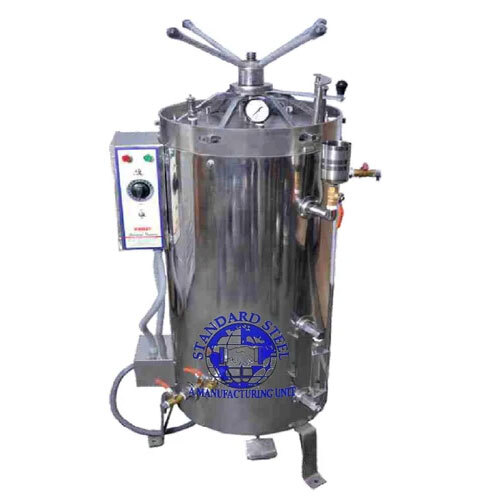
High Pressure Vertical Autoclave with Radial Lock
Price 65000.0 INR / Unit
Minimum Order Quantity : 1 Unit
Voltage : 220V / 50Hz (Standard), also available in 110V or 440V on request Horsepower (HP)
Material : Stainless steel
Equipment Materials : Stainless Steel (Inner and Outer Chambers)
Power : 2 kW 6 kW (Depending on model and size) Watt (w)
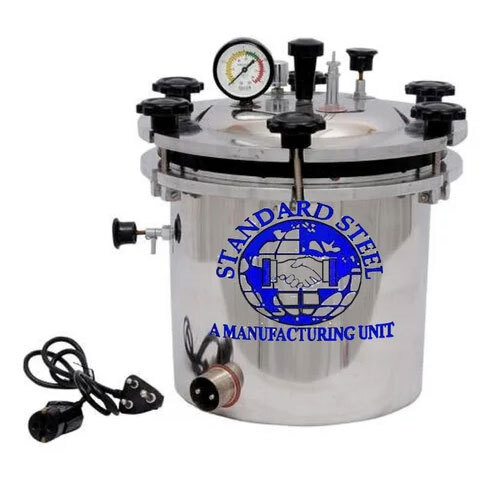
Portable Autoclave Single Drum
Price 7500.0 INR
Minimum Order Quantity : 1 Pieces
Voltage : 220V AC
Material : Aluminum
Equipment Materials : Aluminum body, Stainless steel fittings
Power : Electric
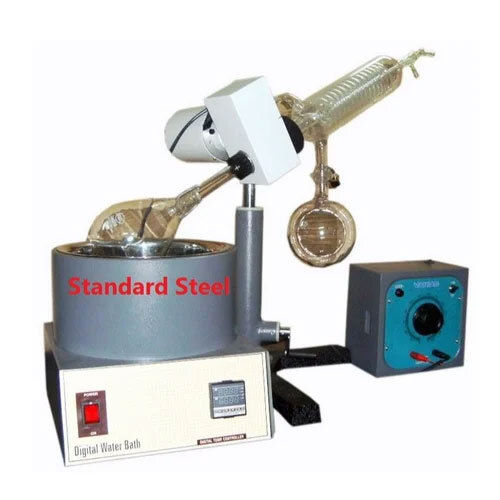
Rotary Vacuum Evaporator
Price 48000.0 INR
Minimum Order Quantity : 1 Pieces
Voltage : 220V / 50Hz
Material : Borosilicate Glass, SS304
Equipment Materials : Borosilicate Glass and stainless steel frame
Power : 1 kW
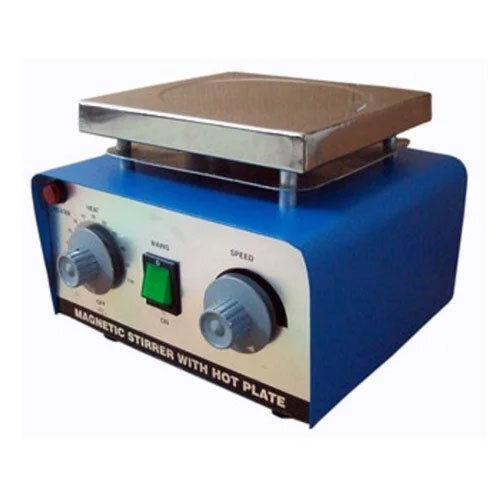
Magnetic Stirrer With Hot Plate
Price 3600.0 INR
Minimum Order Quantity : 1
Voltage : 220 V AC
Material : Mild steel
Equipment Materials : MS powder coated body
Power : 200 W

 Send Inquiry

Our Products
- Hospital Furniture Manufacturer
- Hospital Beds
- Hospital Trolley
- Delivery Table
- Hospital Cabinet
- IV Stand
- Hospital Stretcher
- Revolving Stool
- Examination Couch
- Mortuary Equipment
- Laboratory Furniture
- Anatomical Models
- Pharmacy Equipment
- Operating Table
- Blood Bank Equipment
- Medical Scale
- Laboratory Glassware
- Laboratory Equipment
- Laboratory Instrument
- Operation Theater Light
- Microscope
- Scientific Instrument
- LED Operation Room Light
- Anatomy Equipment
- Muffle Furnace
- Laboratory Incubators
- Wheel Chairs
- Industrial Oven
- Hot Air Oven
- Laboratory Spectrometer
- Hospital Holloware
- Laboratory Clamp
- Laboratory Ware
- Hospital Delivery Bed
- Mortuary Equipment
- Histopathology Equipment
- Blood Bank


530, Ram Bagh Road, Ambala Cantt,Ambala Cantt - 133001, Haryana, India

Mr Sachin Dhiman
(Director )
Mobile :08071790689
 Send Inquiry
 Send SMS
 Call Me Free
Developed and Managed by Infocom Network Private Limited.


 English
 Spanish
 French
 German
 Italian
 Chinese (Simplified)
 Japanese
 Korean
 Arabic
 Portuguese