
Call us now :08071790689
 Send Inquiry
 Send Inquiry
Histamine Chamber
MOQ : 1 Piece
Histamine Chamber Specification
- Noise Level
- Low
- Temperature
- Ambient
- Features
- Transparent chamber, easy cleaning, ergonomic design, durable body, easy sample introduction
- Phase
- Single Phase
- Frequency
- 50 Hz
- Usage & Applications
- For bronchoconstrictor studies, respiratory and allergy research in pharmacology/laboratory animals
- Type
- Other
- Material
- ms
- Capacity
- 20 Kg/hr
- Computerized
- No
- Control Mode
- Manual
- Voltage
- 220 V
- Power
- 50 W
- Weight (kg)
- 7 kg
- Dimension (L*W*H)
- 320 x 220 x 210 mm
- Color
- Stainless Steel/Silver
- Number of Chambers
- 2
- Chamber Material
- Acrylic/Glass viewing window
- Portability
- Portable table-top design
- Operating Method
- Manual control for exposure
- Sample Tray Material
- Stainless Steel
Histamine Chamber Trade Information
- Minimum Order Quantity
- 1 Piece
- FOB Port
- EXW
- Supply Ability
- 1 Piece Per Day
- Delivery Time
- 15 Days
- Sample Available
- Yes
- Packaging Details
- STANDARD PACKING
- Main Domestic Market
- All India
- Certifications
- ISO CE
Histamine Chamber About
Histamine Chamber
Description
Compact histamine aerosol apparatus consisting of a clear perpex exposition chamber divided in two sections an all glass neubilizer and dial type sphygmomanometer for assay of anti-histamines drug on guinea-pigs etc.
Efficient Respiratory Research Tool
Designed for bronchoconstrictor studies and allergy research, the Histamine Chamber provides user-friendly and precise manual control over exposure. The transparent acrylic/glass viewing window ensures clear visibility, while the stainless steel sample tray and durable body enable effective and hygienic operation for laboratory procedures.
Portable and Durable Design
This table-top unit weighs just 7 kg and features ergonomic construction, making it easy to move and set up in a variety of laboratory settings. The strong stainless steel/silver finish, combined with ambient temperature operation and low noise levels, make it suitable for diverse research needs and long-term use.
FAQs of Histamine Chamber:
Q: How does the Histamine Chamber operate for bronchoconstrictor studies?
A: The chamber uses manual controls to expose laboratory animals to histamine aerosols, allowing researchers to perform bronchoconstrictor and respiratory studies efficiently and safely. Its transparent viewing window offers clear observation throughout the process.Q: What materials are used in constructing the Histamine Chamber?
A: The device is built with a robust stainless steel body and sample tray, and features acrylic or glass viewing windows for transparency and durability. This ensures resistance to chemical cleaning agents and easy maintenance.Q: When should I use the Histamine Chamber in my lab research?
A: This chamber is ideal for studies focusing on respiratory reactions, allergy responses, and pharmacological trials that require controlled exposure settings for laboratory animals. Its best utilized when accurate manual control and clear observation are needed.Q: Where can the Histamine Chamber be placed in a laboratory environment?
A: Thanks to its compact dimensions and portable table-top design, the Histamine Chamber can be conveniently positioned on laboratory benches or designated research stations without occupying excessive space.Q: What is the process for introducing samples into the chamber?
A: Samples or laboratory animals are placed onto the stainless steel tray from the accessible opening. The manual controls allow the operator to regulate exposure time and amount seamlessly, ensuring research protocols are followed closely.Q: What are the primary benefits of using this Histamine Chamber?
A: Key benefits include ergonomic operation, easy sample introduction, transparent monitoring, durable materials, straightforward cleaning, and low operational noise. Its portability and manual control provide flexibility in various research setups.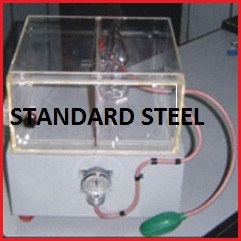
Tell us about your requirement

Price:
Quantity
Select Unit
- 50
- 100
- 200
- 250
- 500
- 1000+
Additional detail
Mobile number
Email

More Products in Pharmacy Equipment Category
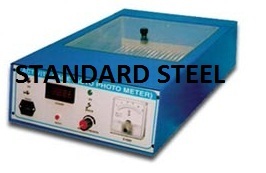
Activity Cage Actophotometer
Minimum Order Quantity : 1 Piece
Frequency : 50 Hz
Power : 40 W
Capacity : 20 Kg/hr
Computerized : No
Noise Level : Low, <40 dB
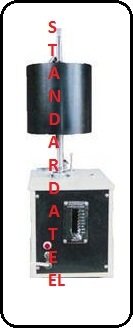
Sherrington Rotating Drum Kymograph
Minimum Order Quantity : 1 Piece
Frequency : 50 Hz
Power : 45W
Capacity : 20 Kg/hr
Computerized : No
Noise Level : Low

 Send Inquiry

Our Products
- Hospital Furniture Manufacturer
- Hospital Beds
- Hospital Trolley
- Delivery Table
- Hospital Cabinet
- IV Stand
- Hospital Stretcher
- Revolving Stool
- Examination Couch
- Mortuary Equipment
- Laboratory Furniture
- Anatomical Models
- Pharmacy Equipment
- Operating Table
- Blood Bank Equipment
- Medical Scale
- Laboratory Glassware
- Laboratory Equipment
- Laboratory Instrument
- Operation Theater Light
- Microscope
- Scientific Instrument
- LED Operation Room Light
- Anatomy Equipment
- Muffle Furnace
- Laboratory Incubators
- Wheel Chairs
- Industrial Oven
- Hot Air Oven
- Laboratory Spectrometer
- Hospital Holloware
- Laboratory Clamp
- Laboratory Ware
- Hospital Delivery Bed
- Mortuary Equipment
- Histopathology Equipment
- Blood Bank


530, Ram Bagh Road, Ambala Cantt,Ambala Cantt - 133001, Haryana, India

Mr Sachin Dhiman
(Director )
Mobile :08071790689
 Send Inquiry
 Send SMS
Developed and Managed by Infocom Network Private Limited.


 English
 Spanish
 French
 German
 Italian
 Chinese (Simplified)
 Japanese
 Korean
 Arabic
 Portuguese