
Call us now :08071790689
 Send Inquiry
 Send Inquiry
Sherrington Rotating Drum Kymograph
MOQ : 1 Piece
Sherrington Rotating Drum Kymograph Specification
- Usage & Applications
- Laboratory use for recording physiological events, muscle contractions, and experiments
- Temperature
- Ambient
- Features
- Smooth rotation; Variable speed; Heavy base; Easy drum interchangeability
- Frequency
- 50 Hz
- Noise Level
- Low
- Phase
- Single Phase
- Type
- Other
- Material
- ms
- Capacity
- 20 Kg/hr
- Computerized
- No
- Control Mode
- Manual
- Voltage
- 220V AC
- Power
- 45W
- Weight (kg)
- Approx 8 kg
- Dimension (L*W*H)
- 30 x 28 x 40 cm
- Color
- Black / Chrome Finish
- Motor Type
- Precision electric motor with speed governor
- Drum Size
- 150 mm diameter x 100 mm width
- Base Material
- Cast Iron for stability
- Writing Surface
- Polished for uniform recording
- Assembly
- Ready to use; minimal setup required
- Accessories Included
- Starter key, Recording lever, Power cord
- Rotational Speed
- 10, 25, 50 RPM selectable
- Safety Mechanism
- Overload protection
- Application Detail
- Ideal for nerve-muscle and cardiac studies
Sherrington Rotating Drum Kymograph Trade Information
- Minimum Order Quantity
- 1 Piece
- FOB Port
- EXW
- Supply Ability
- 1 Piece Per Day
- Delivery Time
- 15 Days
- Packaging Details
- STANDARD PACKING
- Main Domestic Market
- All India
- Certifications
- ISO CE
Sherrington Rotating Drum Kymograph About
Sherrington Rotating Drum And KymographDescription
This is an electrically driven recording drum or kymograph suitable for use by students for lab. Experiments. These kymographs are also used to measure atmospheric pressure, tuning fork vibrations and functioning of steam engines.Its drive mechanism consists of constant speed heavy duty electric motor and an accurate gear box contained in the base together with robust plate clutch. Engagement of various gear ratios are affected by sliding the lever into the slot marked with surface speed or by a knob.The recording drum or cylinder has a 6 dia and stainless steel spindle have been standardized to make the same universal and interchangeable. It has 8 variable speeds. The speed is measured in mm per second. Eight variable speeds are 0. 12, 0. 25, 1. 25, 2. 5, 12. 5, 25, 320 and 640 mm per second. A hand gear is provided to change the speed of the kymograph.Double electric contact arms are clamped on the main spindle and a stout double-contact block is fitted on top of the base. It runs on 220v, ac 50hz.
Reliable Performance for Physiology Studies
Engineered for accurate and consistent data recording, the Sherrington Rotating Drum Kymograph is tailored for nerve-muscle and cardiac research. Its robust construction and variable speed options enhance experimental flexibility, making it a preferred choice among laboratories across India.
User-Friendly Design and Effortless Assembly
This kymograph arrives ready for use with minimal setup needed. The cast iron base provides superior stability, while the intuitive manual control mode allows straightforward adjustments during experiments. Included accessories ensure seamless recording from the start.
Durability and Safety Assurance
Constructed with heavy-duty materials, this instrument supports up to 20 kg/hr capacity and features an overload protection mechanism, safeguarding both user and device during extended operation. The polished writing surface and easy interchangeability further add to its lasting utility in any lab environment.
FAQs of Sherrington Rotating Drum Kymograph:
Q: How do you operate the Sherrington Rotating Drum Kymograph in a laboratory setting?
A: Operation is straightforward: connect the device to a 220V AC power source using the supplied cord, use the starter key to power on, and select your desired rotational speed (10, 25, or 50 RPM) via manual controls. Position your recording lever and begin documenting physiological activity, such as muscle contractions.Q: What types of studies or applications is this kymograph most suitable for?
A: It is ideally suited for laboratory applications involving nerve-muscle and cardiac studies, as well as general physiological experiments that require accurate time-based recordings of contractions or other responses.Q: When should the kymograph drum be replaced or interchanged?
A: Replace or interchange the drum when switching between experiments that require a clean surface or different recording conditions. The design allows easy drum changes without complex disassembly, maintaining workflow efficiency.Q: Where can this kymograph be installed, and what are the space requirements?
A: Due to its compact dimensions (30 x 28 x 40 cm) and stable cast iron base, it can be set up on most standard laboratory benches or workstations. Ensure the environment is ambient in temperature and has access to a 220V AC power supply.Q: What is the process of recording physiological events with this instrument?
A: Mount the specimen and recording lever, power up the device, select the required speed, and initiate the event or stimulus. The polished drum rotates smoothly, enabling uniform and accurate recording of contractions or other physiological markers on the drum surface.Q: What benefits does this kymograph offer compared to computerized or digital models?
A: While not computerized, this mechanical kymograph offers robust reliability, real-time visual data, minimal electronic interference, and easy maintenance. Its simplicity also makes it ideal for teaching, demonstrations, and classic experimental protocols.Q: How does overload protection enhance the safety and durability of the device?
A: The integrated overload protection automatically intervenes if operational limits are exceeded, preventing potential damage to internal components and ensuring the safety of both the user and the instrument during intensive or extended use.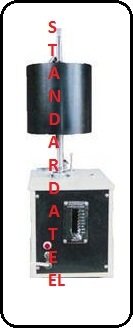
Tell us about your requirement

Price:
Quantity
Select Unit
- 50
- 100
- 200
- 250
- 500
- 1000+
Additional detail
Mobile number
Email

More Products in Pharmacy Equipment Category
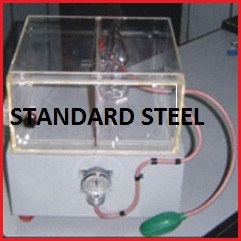
Histamine Chamber
Minimum Order Quantity : 1 Piece
Material : ms
Weight (kg) : 7 kg
Color : Stainless Steel/Silver
Phase : Single Phase
Noise Level : Low
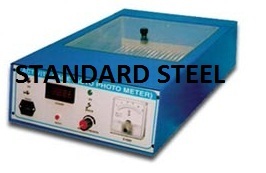
Activity Cage Actophotometer
Minimum Order Quantity : 1 Piece
Material : ms
Weight (kg) : Approx 5 kg
Color : Black body with white markings
Phase : Single Phase
Noise Level : Low, <40 dB

 Send Inquiry

Our Products
- Hospital Furniture Manufacturer
- Hospital Beds
- Hospital Trolley
- Delivery Table
- Hospital Cabinet
- IV Stand
- Hospital Stretcher
- Revolving Stool
- Examination Couch
- Mortuary Equipment
- Laboratory Furniture
- Anatomical Models
- Pharmacy Equipment
- Operating Table
- Blood Bank Equipment
- Medical Scale
- Laboratory Glassware
- Laboratory Equipment
- Laboratory Instrument
- Operation Theater Light
- Microscope
- Scientific Instrument
- LED Operation Room Light
- Anatomy Equipment
- Muffle Furnace
- Laboratory Incubators
- Wheel Chairs
- Industrial Oven
- Hot Air Oven
- Laboratory Spectrometer
- Hospital Holloware
- Laboratory Clamp
- Laboratory Ware
- Hospital Delivery Bed
- Mortuary Equipment
- Histopathology Equipment
- Blood Bank


530, Ram Bagh Road, Ambala Cantt,Ambala Cantt - 133001, Haryana, India

Mr Sachin Dhiman
(Director )
Mobile :08071790689
 Send Inquiry
 Send SMS
Developed and Managed by Infocom Network Private Limited.


 English
 Spanish
 French
 German
 Italian
 Chinese (Simplified)
 Japanese
 Korean
 Arabic
 Portuguese