
Call us now :08071790689
 Send Inquiry
 Send Inquiry
Blood Collection Mixer
Price 5500.0 INR/ Piece
MOQ : 1 Piece
Blood Collection Mixer Specification
- Treatment Type
- Blood Collection, Preservation
- Material
- Mild Steel (MS), Stainless Steel (SS)
- Humidity Range
- Up to 85% RH (Non-Condensing)
- Dimension (L*W*H)
- 450 x 300 x 210 mm
- Shape
- Rectangular
- Accuracy
- ±2 ml
- Display Type
- LED or LCD
- Product Type
- ot table
- Weight
- 8 to 10 kg
- Color Code
- White / Blue
- Frequency
- 50 Hz
- Power
- 230 V AC
- Function
- Mixes blood and anticoagulant uniformly; Auto Clamp at end of collection
- Application
- ot
- Automation Grade
- Automatic
- Height
- 210 mm
- Temperature Range
- 10°C to 40°C
- Suitable For
- Whole Blood Collection
- Storage Capacity
- Up to 450 ml
- Properties
- Controlled and Gentle Mixing of Blood with Anticoagulants
- Phase
- Single Phase
- Voltage
- 230 V
- Power Source
- Electric
- Display
- Digital Display
- Mixing Speed
- 12 - 16 rpm
- Clamping Option
- Automatic & Manual End Clamping
- Calibration
- Manual / Factory Calibrated
- Safety Features
- Auto Clamp in Case of Power Failure; Overload Protection
- Operating Mode
- Continuous
- Collection Time
- Adjustable Depending on Blood Flow
- Usage Environment
- Indoor, Clean and Dry Area
- Alarm Feature
- Audio-Visual Alarm When Collection is Complete or Error Detected
- Tray Material
- Stainless Steel
- Maximum Load
- Up to 1 Bag (Single Unit Collection)
Blood Collection Mixer Trade Information
- Minimum Order Quantity
- 1 Piece
- FOB Port
- india
- Supply Ability
- 1 Piece Per Day
- Delivery Time
- 15 Days
- Sample Available
- No
- Sample Policy
- Sample costs shipping and taxes has to be paid by the buyer
- Packaging Details
- standard packing
- Main Export Market(s)
- Asia, Africa
- Main Domestic Market
- All India
- Certifications
- iso
Blood Collection Mixer About
We are a well-established entity in the domain, engaged in manufacturing, exporting and supplying a broad gamut of Blood Collection Mixer. The offered mixer is widely used in hospitals, nursing homes and pathology labs for mixing of blood samples and cell suspensions. Our adroit professionals use optimum quality components to manufacture this mixer. Besides, the provided Blood Collection Mixer can be purchased from us in several technical specifications at reasonable prices.
Features of Blood Collection Mixer:
- Ergonomic design
- Hassle free performance
- Long working life
- Easy to operate
- Blood Sample Mixer
Specification
- For through mixing of blood samples and cell suspensions.
- Compact and ergonomic design.
- Keeps the contents of closed tubes in gentle motion by rocking while rolling.
- Can accommodate various sizes of centrifuge & tubes.
- 4 rolls of PVC rods for smooth operation.
Technical Data
| Rolling speed | 10-30 RPM |
| Rocking frequency | 5 Cycles per minute at 35o angle |
| No. of rollers | 4 or 6 |
| dimensions | 455 x 265 x 120 mm. |
| Exterior body | MS coted |
| Rolling rods material | PVC each of 320 mm |
| Maximum Load | 5Kg. |
| Supply | 220/230V, 50 Hz |
| Timer | No |
Uniform and Safe Blood Collection
The Blood Collection Mixer guarantees consistent mixing of blood with anticoagulants, minimizing clotting risk and ensuring sample quality. With options for both automatic and manual end clamping, it caters to various operator preferences and facility protocols. Safety is maintained through auto-clamp in case of power failure and overload protection, while real-time monitoring is enabled by an intuitive digital display.
Accurate and Adjustable Performance
Operators can calibrate the device manually or rely on factory settings for optimal accuracy (2 ml). The device accommodates blood collection from a single unit, providing precise control over volume (up to 450 ml) and timing, which adapts to individual blood flow rates. Its continuous mixing mode and adjustable parameters ensure flexibility for different clinical and blood bank uses.
FAQs of Blood Collection Mixer:
Q: How does the Blood Collection Mixer ensure uniform mixing during blood collection?
A: The Blood Collection Mixer gently rocks the blood bag at speeds between 12 and 16 rpm, ensuring thorough and consistent mixing of blood with anticoagulants. This process helps prevent clot formation and preserves sample quality for further processing.Q: What safety features are integrated into the blood collection mixer?
A: This device includes multiple safety features such as an audio-visual alarm for collection completion or errors, automatic clamping in case of power failure, and overload protection. These features reduce operational risks and safeguard both the user and collected samples.Q: When can the audio-visual alarm be triggered?
A: The audio-visual alarm activates automatically when either the blood collection process completes or an operational error is detected, such as an overload or incorrect setup. This immediate feedback allows timely response from the operator.Q: Where should the Blood Collection Mixer be placed for optimal performance?
A: For best results, place the mixer in an indoor, clean, and dry area. Avoid locations with excessive humidity beyond 85% RH (non-condensing) and ensure the device is used on a stable surface within the recommended temperature range of 10C to 40C.Q: What is the process for using the Blood Collection Mixer?
A: Begin by placing the blood bag onto the stainless steel tray and securing it. Start the device and select the desired mixing speed and collection settings. As blood is drawn and mixed, the unit monitors volume and automatically clamps the bag at collection end. All progress is displayed digitally for easy oversight.Q: What are the primary benefits of using this mixer for blood collection?
A: Using the Blood Collection Mixer enhances blood collection efficiency, provides accurate volume control (2 ml), and ensures the safety of both operator and samples. Automation features help maintain consistency and quality, while alarms and protective mechanisms support reliable operation in clinical settings.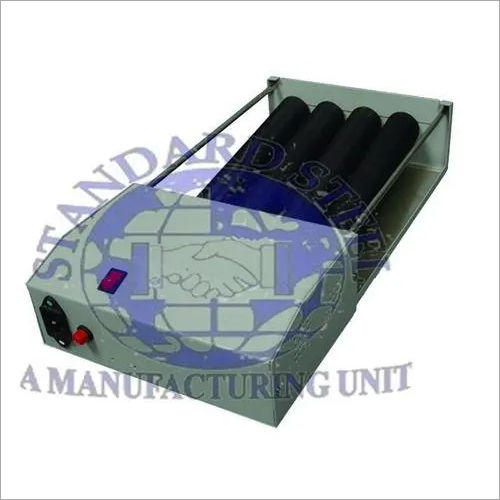
Tell us about your requirement

Price:
Quantity
Select Unit
- 50
- 100
- 200
- 250
- 500
- 1000+
Additional detail
Mobile number
Email

More Products in Blood Bank Equipment Category
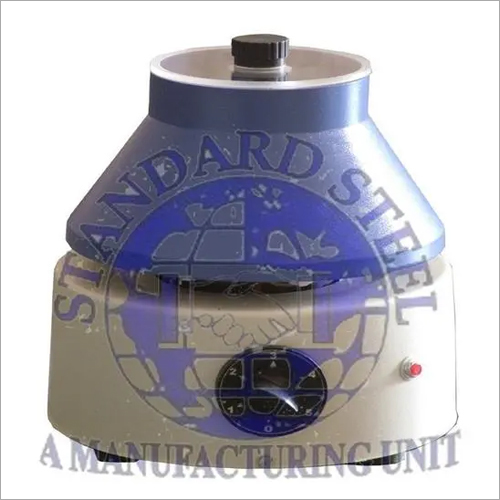
Doctor Centrifuge Machine
Price 3200.0 INR / Piece
Minimum Order Quantity : 1 Piece
Product Type : Laboratory centrifuge machine
Weight : 6.5 kg approx.
Color Code : Blue & White
Power : 40 W
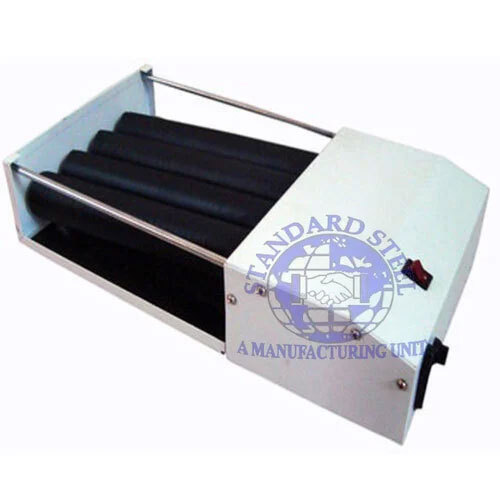
Blood Sample Tube Roller Mixer
Price 6000.0 INR
Minimum Order Quantity : 1
Product Type : Blood sample tube roller mixer
Weight : 4 kg
Color Code : Grey
Power : 25 W
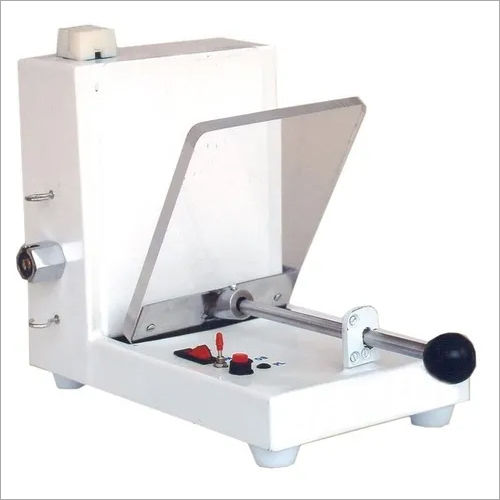
Automatic Plasma Extractor
Price 38500.0 INR
Minimum Order Quantity : 1 Piece
Product Type : ot table
Weight : 10 Kg
Color Code : White / Blue
Power : 30 W
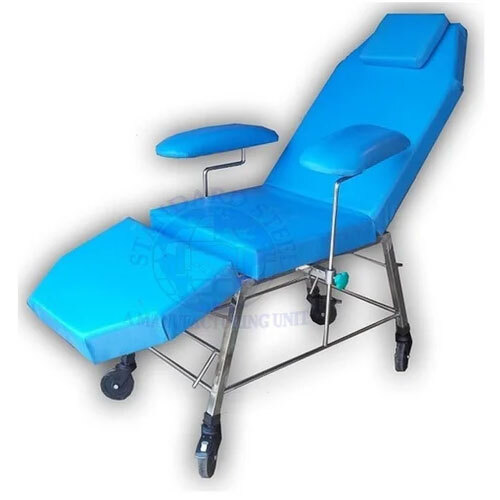
Blood Donor chair Couch
Price 12500.0 INR
Minimum Order Quantity : 1 Pieces
Product Type : Blood donor chair
Weight : Approx. 55 kg
Color Code : Blue upholstery, silver frame
Power : Electric

 Send Inquiry

Our Products
- Hospital Furniture Manufacturer
- Hospital Beds
- Hospital Trolley
- Delivery Table
- Hospital Cabinet
- IV Stand
- Hospital Stretcher
- Revolving Stool
- Examination Couch
- Mortuary Equipment
- Laboratory Furniture
- Anatomical Models
- Pharmacy Equipment
- Operating Table
- Blood Bank Equipment
- Medical Scale
- Laboratory Glassware
- Laboratory Equipment
- Laboratory Instrument
- Operation Theater Light
- Microscope
- Scientific Instrument
- LED Operation Room Light
- Anatomy Equipment
- Muffle Furnace
- Laboratory Incubators
- Wheel Chairs
- Industrial Oven
- Hot Air Oven
- Laboratory Spectrometer
- Hospital Holloware
- Laboratory Clamp
- Laboratory Ware
- Hospital Delivery Bed
- Mortuary Equipment
- Histopathology Equipment
- Blood Bank


530, Ram Bagh Road, Ambala Cantt,Ambala Cantt - 133001, Haryana, India

Mr Sachin Dhiman
(Director )
Mobile :08071790689
 Send Inquiry
 Send SMS
 Call Me Free
Developed and Managed by Infocom Network Private Limited.


 English
 Spanish
 French
 German
 Italian
 Chinese (Simplified)
 Japanese
 Korean
 Arabic
 Portuguese