
Call us now :08071790689
 Send Inquiry
 Send Inquiry
Rotary Vacuum Evaporator
MOQ : 1 Pieces
Rotary Vacuum Evaporator Specification
- Speed Range
- 20 to 200 rpm
- Glass Type
- Borosilicate glass 3.3
- Display Type
- LED Digital Display
- Heating Capacity
- 1000 W
- Accuracy
- ±1°C (temperature control)
- Control Type
- Digital
- Temperature Resistance
- Up to 180°C
- Shape
- Vertical
- Power Supply
- AC 220 V / 50 Hz
- Features
- Manual lift, anti-corrosive frame, PTFE sealing, adjustable rotation and temperature
- Type
- Rotary Vacuum Evaporator
- Dimension (L*W*H)
- 600 x 400 x 900 mm (approx.)
- Equipment Type
- Laboratory Rotary Vacuum Evaporator
- Equipment Materials
- Borosilicate Glass and stainless steel frame
- Power
- 1 kW
- Voltage
- 220V / 50Hz
- Material
- Borosilicate Glass, SS304
- Application
- Solvent distillation, concentration, and purification
- Capacity (Ltr)
- 5 Litre
- Evaporation Speed
- 20 mL/min (based on water)
- Sealing System
- High Vacuum PTFE Sealing
- Lifting Mechanism
- Motorized Lift
- Vacuum Degree
- 0.098 Mpa
- Water Bath Material
- Stainless Steel
- Cooling Type
- Vertical Condenser
- Maximum Load
- 3 Kg
- Drive Unit
- Enclosed Brushless Motor
- Rotation Flask Capacity
- 5 Liters
- Receiving Flask Capacity
- 2 Liters
- Bath Temperature Range
- Room temperature to 99C
- Connector Material
- PTFE (Polytetrafluoroethylene)
Rotary Vacuum Evaporator Trade Information
- Minimum Order Quantity
- 1 Pieces
- FOB Port
- exw
- Payment Terms
- Telegraphic Transfer (T/T)
- Supply Ability
- 100 Per Month
- Delivery Time
- 15 Days
- Sample Available
- Yes
- Sample Policy
- Sample costs shipping and taxes has to be paid by the buyer
- Packaging Details
- Standard packing
- Main Export Market(s)
- Africa
- Main Domestic Market
- All India
- Certifications
- ISO CE
Rotary Vacuum Evaporator About
Rotary Vacuum Evaporator
Description
- Low profile design gives ease in operation.
- Spark less drive unit AC motor with assured speed regulation- 50 to 250rpm.
- Digital temperature controller for water bath.
- PTFE/Glass sealing mechanism.
- Smooth, adjustable, maintenance free single lever manual lift.
Technical Data
|
Rotational Speed |
50-250 RPM |
|
Heating Bath Dimensions |
230 x 130 mm. |
|
Volume of heating bath |
4 litre Approximate |
|
Bath temperature range |
Ambient to 180o |
|
Heating bath controller |
PID with display set & actual temperature |
|
Heating bath material |
SS 304 |
|
Minimum/maximum flask size |
50ml/3000ml |
|
Lift |
Mechanical |
|
Height adjustable |
170 mm. Approximate |
|
Flask ejector |
Yes |
|
Condenser support |
Yes |
|
Power supply |
230V AC, 50 Hz |
Efficient Solvent Distillation and Concentration
Designed for solvent distillation, concentration, and purification, this rotary vacuum evaporator offers precise temperature control and excellent evaporation efficiency. Its adjustable speed range (20200 rpm), digital controls, and LED display ensure optimal results for varied laboratory applications. The system maintains stable operation with a maximum load of 3 kg and advanced PTFE sealing for high vacuum retention.
Superior Materials and Safety Features
Constructed from Borosilicate glass 3.3 and stainless steel, the evaporator demonstrates strong chemical resistance and durability. The anti-corrosive frame, motorized lifting, and PTFE connectors provide superior reliability during continuous use. The vertical condenser enhances cooling efficiency while the enclosed brushless motor ensures low maintenance and long service life.
Customizable for Laboratory Needs
With a 5-liter flask capacity, modular design, and easily adjustable bath temperature and speed, this evaporator can accommodate diverse research needs. The stainless steel water baths temperature can be accurately set from ambient to 99C, making it versatile for a wide range of solvents and processes. Its compact design (600 x 400 x 900 mm) makes it ideal for modern lab spaces.
FAQs of Rotary Vacuum Evaporator:
Q: How does the rotary vacuum evaporator improve solvent distillation in laboratories?
A: This rotary vacuum evaporator enables rapid and efficient distillation of volatile solvents through vacuum-induced evaporation, reducing boiling points and allowing gentle removal of solvents without decomposing heat-sensitive substances. The 5-liter rotation flask and strong vacuum degree (0.098 Mpa) allow large volume processing in less time, improving laboratory productivity.Q: What materials are used in this rotary evaporator and how do they benefit users?
A: Major components are made from Borosilicate glass 3.3 and corrosion-resistant stainless steel (SS304). These materials offer excellent chemical resistance, durability, and thermal stability, ensuring long equipment life and consistent performance during intensive laboratory processes.Q: When should I use the motorized lift feature of the evaporator?
A: The motorized lift is essential when raising or lowering the evaporation flask into or out of the heating bath. It provides effortless, precise adjustment to avoid spillage, enhance safety, and optimize contact with the heated surface during solvent evaporation or retrieval of samples.Q: Where is the ideal placement for this rotary vacuum evaporator in a lab setup?
A: Place the evaporator on a stable, ventilated benchtop clear of obstructions to allow access to all sides. Its compact footprint (600 x 400 x 900 mm) ensures it fits most laboratory spaces, but keep it near a power source (220 V), and allow room for solvent handling and maintenance.Q: What is the process for controlling temperature and rotation speed during operation?
A: Temperature is digitally controlled via an LED display, allowing precise adjustments up to 99C (accuracy 1C). Rotation speed is set electronically within the range of 20 to 200 rpm, enabling optimal evaporation rates for various solvents and experimental needs.Q: How does the PTFE high-vacuum sealing system contribute to operation?
A: The PTFE high-vacuum sealing offers robust chemical resistance and prevents leaks during operation, maintaining a stable vacuum environment. This ensures efficient solvent recovery, minimizes contamination risk, and extends the life of the system components.Q: What are the main benefits of choosing this model for laboratory work?
A: Key benefits include high evaporation speed, accurate digital controls, extensive temperature range, resistant construction, reduced manual handling via the motorized lift, and reliable vacuum seals. These features provide superior performance and safety, making it well-suited for research institutions, universities, and industrial laboratories.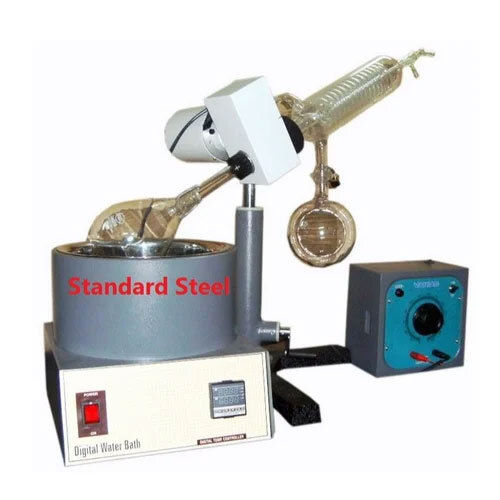
Tell us about your requirement

Price:
Quantity
Select Unit
- 50
- 100
- 200
- 250
- 500
- 1000+
Additional detail
Mobile number
Email

More Products in Laboratory Equipment Category

Disarticulated Human Skeleton Model
Price 12500.0 INR
Minimum Order Quantity : 5
Application : lab
Warranty : 1
Material : Durable, nontoxic PVC plastic
Power : Not required
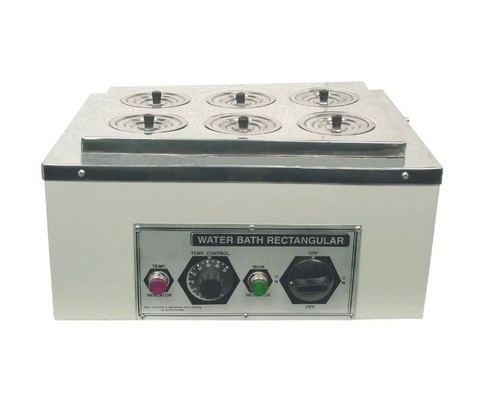
Rectangular Water Bath
Price 5200.0 INR
Minimum Order Quantity : 1 Piece
Application : LAB
Warranty : 1
Material : mild steel and SS
Power : 220 Watt (w)
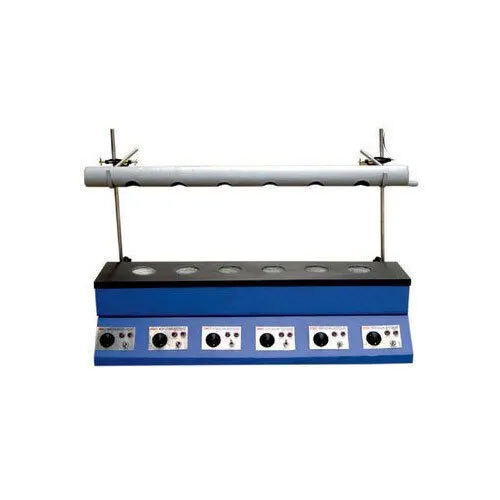
Kjeldahl Distillation Unit
Price 18500.0 INR
Minimum Order Quantity : 1
Application : LAB
Warranty : 1
Material : mild steel
Power : 220 Watt (w)
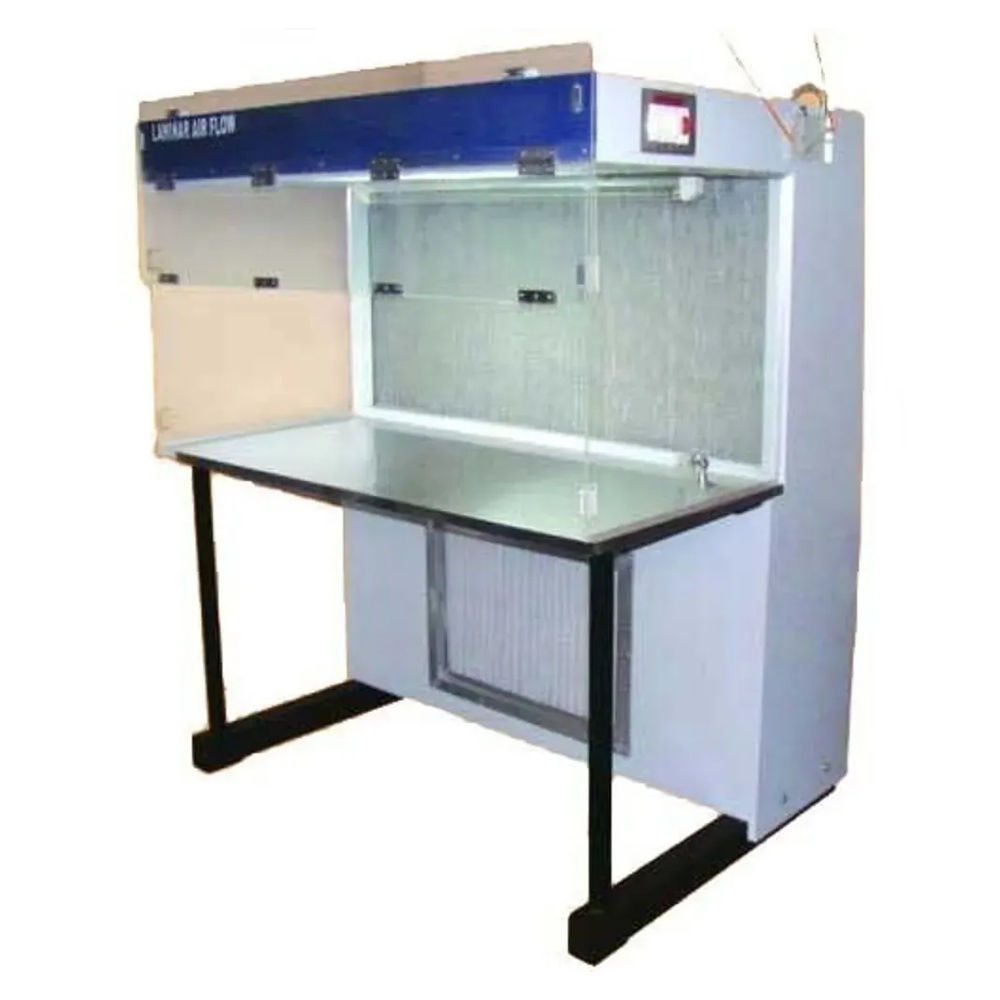
Vertical Laminar Air Flow Cabinet
Price 48000.0 INR / Piece
Minimum Order Quantity : 1 Piece
Application : LAB
Warranty : 1
Material : mild steel
Power : 220 Watt (w)

 Send Inquiry

Our Products
- Hospital Furniture Manufacturer
- Hospital Beds
- Hospital Trolley
- Delivery Table
- Hospital Cabinet
- IV Stand
- Hospital Stretcher
- Revolving Stool
- Examination Couch
- Mortuary Equipment
- Laboratory Furniture
- Anatomical Models
- Pharmacy Equipment
- Operating Table
- Blood Bank Equipment
- Medical Scale
- Laboratory Glassware
- Laboratory Equipment
- Laboratory Instrument
- Operation Theater Light
- Microscope
- Scientific Instrument
- LED Operation Room Light
- Anatomy Equipment
- Muffle Furnace
- Laboratory Incubators
- Wheel Chairs
- Industrial Oven
- Hot Air Oven
- Laboratory Spectrometer
- Hospital Holloware
- Laboratory Clamp
- Laboratory Ware
- Hospital Delivery Bed
- Mortuary Equipment
- Histopathology Equipment
- Blood Bank


530, Ram Bagh Road, Ambala Cantt,Ambala Cantt - 133001, Haryana, India

Mr Sachin Dhiman
(Director )
Mobile :08071790689
 Send Inquiry
 Send SMS
Developed and Managed by Infocom Network Private Limited.


 English
 Spanish
 French
 German
 Italian
 Chinese (Simplified)
 Japanese
 Korean
 Arabic
 Portuguese